Metal Roofing
Looking for Metal Roofing in Raleigh? You may want to read this article learn the differences between Standing Seam and Screw-Down Panel metal roofs.

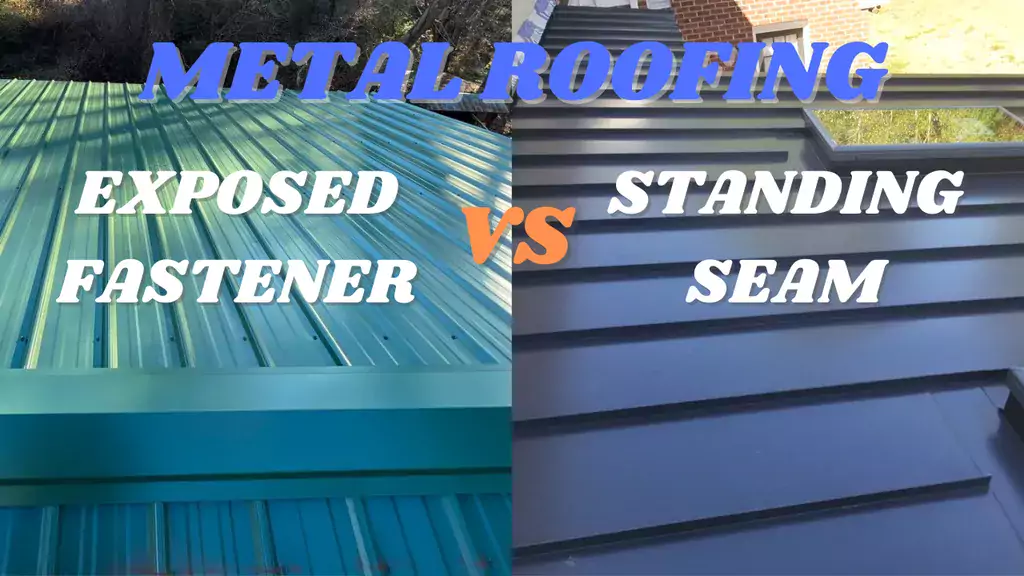
If you’re looking into metal roofing in Raleigh, Cary, Durham, or anywhere around the Triangle, chances are you’ve come across a few different terms for the roofing material itself.
The main kinds of metal roofing you’ll usually see are standing seam, exposed fastener panels, and metal shingles. Of those, standing seam and exposed fastener panels are by far the most common on homes, barns, porches, additions, and accent roofs in our area.
If those terms are new to you, that’s okay. Metal roofing can be a great option, but the details matter. A standing seam roof and a screw-down metal roof may both be “metal roofs,” but they are not the same system, they are not installed the same way, and they do not usually make sense for the same situations.
That matters even more in North Carolina, where roofs deal with heat, humidity, heavy rain, wind-driven storms, pine needles, tree coverage, and in coastal areas, more serious wind and insurance considerations. A metal roof can be a premium long-term investment, but only if the right system is chosen for the home.
In this blog we are going to discuss:
- The two major types of metal roofing
- Comparing metal roofing panels
- What homeowners in North Carolina should know about metal roofing in 2026
Let’s get started!
Standing Seam vs Exposed Fastener Metal Roofing
What is a Standing Seam Metal Roof?
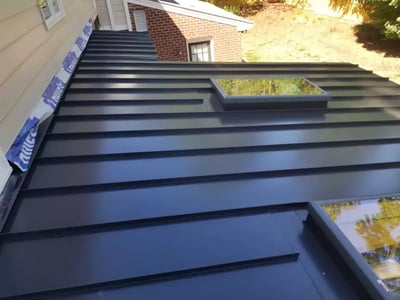
A standing seam metal roof is made from vertical metal panels that lock together at raised seams. The fasteners are hidden underneath the metal, which means they are not directly exposed to rain, sunlight, and weather.
Most standing seam roofs use a steel or aluminum panel with a protective coating system. In many cases, the steel substrate is coated with zinc or a zinc-aluminum alloy, such as Galvalume®, to help protect the panel from corrosion. The paint finish on top of the panel also matters, especially in a hot, humid climate like North Carolina.
Generally, standing seam is considered the higher-end metal roofing option. It is used on both residential and commercial buildings, and it is the system most homeowners are thinking of when they picture a clean, modern metal roof.
In the Raleigh area, we often see standing seam used in three ways: as a full roof system on custom homes, as an accent over porches or bay windows, or on lower-slope sections where the homeowner wants a more durable, architectural look than shingles can provide.
Standing seam metal roofs are popular because they are weather resistant, clean-looking, and designed to allow the metal to expand and contract without the fasteners being exposed. That movement is a big deal. Metal moves as it heats and cools, and a good standing seam system is designed with that movement in mind.
What is an Exposed-Fastener Metal Roof?
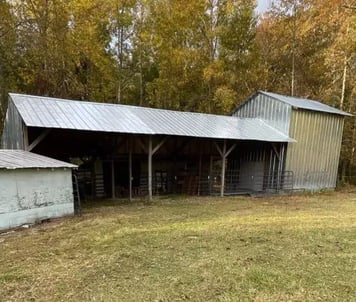
An exposed-fastener metal roof, also known as a screw-down panel roof, is a simpler metal roofing system. The metal panels overlap, and screws are driven through the panel to hold it to the roof structure.
This type of metal roofing is common on barns, sheds, carports, agricultural buildings, detached garages, and utility structures. The panels are widely available, and in many cases, you can buy similar-looking metal panels from major home improvement stores.
That does not automatically make it a bad product. Exposed fastener panels can be useful in the right situation. The issue is that they are often sold as if they are the same thing as a premium standing seam roof, and they are not.
The biggest difference is the fastener. On a screw-down roof, the screws and rubber washers are exposed to the weather. Over time, those washers can dry out, compress, crack, or loosen. As the metal expands and contracts, the screws can also begin to back out or enlarge the hole around the fastener.
That is why we are careful about recommending exposed fastener metal on heated living spaces. On an unconditioned barn, shed, or carport, it may make sense. On a home, bonus room, porch addition, or finished structure, we usually want to slow down and make sure the homeowner understands the maintenance tradeoff.
Comparing Metal Roof Panels
Which metal roof requires more maintenance?
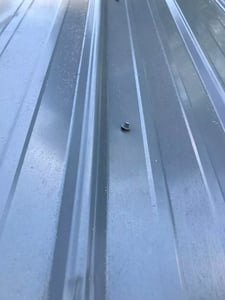
The screw-down type roof will require more maintenance, hands-down.
As we mentioned earlier, metal expands and contracts as it heats and cools. Standing seam metal roofs are designed to allow this process to happen naturally. Exposed fastener roofs restrict that movement because the panels are pinned down through the face of the metal.
As the metal moves, it can fight against the screws holding it down. Over time, screws may loosen, back out, or wear the hole around the fastener. Once that happens, the roof may need new screws, larger screws, replacement washers, or spot repairs around problem areas.
The other issue is the washer. Each screw has a gasket or washer that helps seal the hole. That washer is exposed to sun, rain, heat, and humidity. In North Carolina, roof surfaces can get very hot during the summer, and that repeated heat exposure is hard on rubber and synthetic components.
Depending on the product, roof design, exposure, and installation quality, those fasteners may need attention every 5-10 years. That does not mean every exposed fastener roof will leak in year five, but it does mean the roof should be treated as a maintenance item instead of a “set it and forget it” roof.
Standing seam roofs still need maintenance, but not nearly as much. The fasteners are hidden, the panels are designed to move, and the main areas to watch are penetrations, transitions, flashing details, valleys, and areas where debris can collect.
For homeowners in wooded areas around Raleigh, Cary, Apex, Durham, Chapel Hill, and Wake Forest, keeping valleys and roof transitions clear is especially important. Pine needles, leaves, and sticks can hold moisture and slow drainage, even on a premium roof system.
Which metal roof costs less?
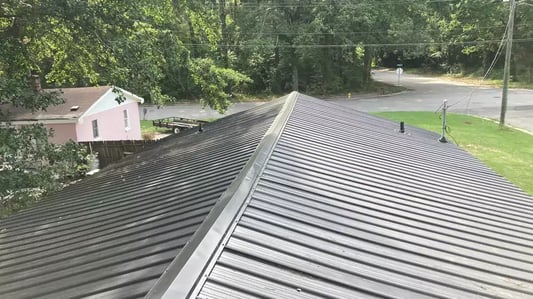
When it comes to upfront price, exposed fastener roofs usually cost less than standing seam roofs.
A main reason is that exposed fastener panels are typically wider, simpler, and faster to install. The panels themselves are often less expensive, and the labor is usually less specialized than a true standing seam installation.
Standing seam costs more because the system is more involved. The panels may need to be custom fabricated or carefully ordered to size, the flashing details are more precise, and the installer needs to understand the panel profile, clips, seams, expansion, trim, and manufacturer requirements.
In general, standing seam metal roofing is a premium roof system. It is usually more expensive than asphalt shingles and more expensive than screw-down metal. The tradeoff is better long-term performance, lower fastener maintenance, and a cleaner architectural appearance.
In 2026, pricing can also be affected by material availability, coating systems, tariffs, steel and aluminum market changes, and local labor capacity. Roofing Contractor’s 2026 State of the Industry report noted that some contractors are seeing more caution around metal roofing because of pricing uncertainty, even though residential interest remains strong as homeowners look for longer-lasting roof options.
Always make sure your contractor has experience installing the specific type of metal roof you are considering. Metal roofing is not the place to “figure it out as you go.” A poor installation can turn an expensive roof into an expensive problem.
Which metal roof will last longer?
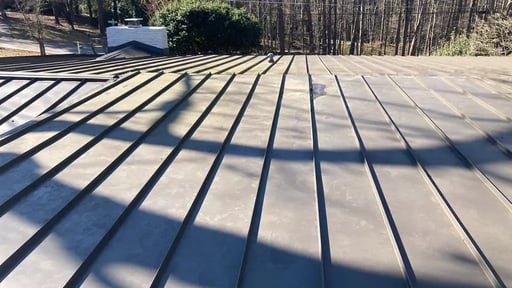
As with the maintenance category, standing seam usually wins on longevity.
The hidden fasteners, better movement design, thicker panel options, and higher-end coating systems allow a properly installed standing seam roof to last for decades. This is one of the biggest reasons homeowners consider metal roofing in the first place.
That does not mean a standing seam roof is indestructible. The installation still matters. Flashing still matters. Vent pipes, chimneys, skylights, walls, valleys, and transitions still matter. A premium panel cannot overcome sloppy details around the areas where most leaks actually happen.
One cosmetic issue homeowners may hear about is oil canning. Oil canning is a visible waviness in the flat area of a metal panel. It can happen for several reasons, including panel width, metal thickness, substrate irregularities, installation conditions, and normal thermal movement. In most cases, oil canning is cosmetic and does not mean the roof is failing.
Exposed fastener roofs can also last a long time in the right setting, but they are more dependent on periodic fastener maintenance. If the screws and washers are neglected, small problems can turn into leaks over time.
What Homeowners in North Carolina Should Know About Metal Roofing in 2026
Metal roofing continues to get attention because homeowners are thinking more about long-term value, severe weather, energy performance, and the total cost of owning a roof. Grand View Research estimates the global metal roofing market at $21.5 billion in 2026, with continued growth projected through 2033. The Freedonia Group has also projected U.S. metal roofing demand to continue growing through 2026, with standing seam remaining a major share of demand because of its performance in leak and wind protection.
That lines up with what we see locally. Metal is not the right fit for every home, and most homes in the Triangle still use architectural asphalt shingles. But when a homeowner is planning to stay in the home long-term, wants a premium look, or has a roof section where durability and water-shedding are especially important, metal roofing becomes a serious option.
Metal roofing and North Carolina weather
North Carolina roofs have to deal with a little bit of everything: summer heat, sudden thunderstorms, wind-driven rain, humidity, tree debris, and in coastal areas, tropical systems and salt exposure. That makes system selection important.
For homes around Raleigh, Cary, Durham, Apex, Holly Springs, Wake Forest, and Chapel Hill, the biggest metal roofing concerns are usually installation quality, attic ventilation, flashing details, roof complexity, and debris management. For homes closer to the coast, wind design, corrosion resistance, and insurance-related requirements become even more important.
The Insurance Institute for Business & Home Safety’s FORTIFIED Roof standard is especially relevant in North Carolina coastal markets. FORTIFIED focuses on stronger roof edges, better roof deck attachment, sealed roof decks, and tested roof covers. Metal roof panels can be used in a FORTIFIED Roof system, but they must meet site-specific design pressure requirements, and optional hail upgrades require additional impact standards.
The North Carolina Department of Insurance also notes that some qualifying homes in beach and coastal territories may be eligible for mitigation credits on wind and hail coverage when they include qualifying construction features. In 2025, North Carolina announced grant funding for certain coastal policyholders to help install IBHS-certified FORTIFIED roofs.
Metal roofing and energy performance
Metal roofing can also be part of a more energy-conscious roofing system, but the color and coating matter. A dark metal roof and a light-colored reflective metal roof will not perform the same way in summer heat.
The EPA notes that cool roofs can reduce the amount of heat transferred into a building, and in air-conditioned residential buildings, solar reflectance from a cool roof can reduce peak cooling demand by 11-27%. That does not mean every metal roof will cut your power bill dramatically, but it does mean reflective coatings and color selection are worth discussing before the roof is ordered.
For North Carolina homeowners, this is where the practical decision comes in. A black standing seam roof may look great on a modern farmhouse or porch accent, but a lighter color or higher-reflectance coating may make more sense on a large roof plane with heavy sun exposure. The right answer depends on the home, the design, the attic, and the homeowner’s priorities.
A few field notes from metal roofing in the Triangle
After working on roofs in the Raleigh area for over 30 years, one pattern we’ve seen is that most metal roof problems are not caused by the metal panel itself. They are usually caused by the details around the panel.
On residential metal roofs, the problem areas are often pipe boots, sidewall flashing, chimney flashing, skylights, transitions into shingles, low-slope tie-ins, and valleys that collect debris. On exposed fastener roofs, loose screws and aging washers are also common repair items.
That is why we care so much about whether the roof is being treated as a complete system. The panel is only one part of the roof. The underlayment, flashing, ventilation, fasteners, trim, substrate, and workmanship all have to work together.
For a homeowner, the simplest way to think about it is this: if you want a lower-cost metal roof for a barn, shed, or utility structure, exposed fastener may be worth considering. If you want a long-term metal roof over living space, standing seam is usually the better conversation.
Want More Info About Metal Roofing in Raleigh?
Now that you’ve gotten started learning about the different kinds of metal roofing, check out our blog on the Most Common Roofing Material in Raleigh, NC!
We’ve also done a pretty thorough blog breaking down metal roofing against asphalt shingles, so that’s definitely one to give a look if you’re still deciding between those two materials.
If you’re comparing standing seam, exposed fastener panels, or asphalt shingles for your home, the best next step is to look at the roof itself. The right answer depends on the slope, roof complexity, budget, design goals, and how long you plan to own the home.
On Tops Roofing has been working on metal roofs in and around the Raleigh, NC area for over 30 years. If your metal roof needs a repair or replacement, We're on it!
Sources referenced for 2026 updates: Roofing Contractor 2026 State of the Industry, EPA Cool Roof Guidance, IBHS FORTIFIED Roof, IBHS Roof 101, North Carolina Department of Insurance, NCDOI Coastal FORTIFIED Roof Grant Announcement, The Freedonia Group, and Grand View Research.