Storm damage
How close should trees be to your house? Learn safe distances, the roof damage trees cause, and how to protect your roof in the Raleigh area.

How close should trees be to your house?
No branches should directly overhang your roof, and large or tall trees are best kept roughly 15 to 20 feet from the house. Closer than that and you invite scraped shingles, clogged gutters, and falling limbs during storms. The bigger the tree, the more room it needs.
Key takeaways
- Keep branches from overhanging the roof, and give large trees about 15 to 20 feet of clearance.
- The most common tree problems are debris build-up, clogged gutters, and storm-driven falling limbs.
- Leaves and needles that sit on the roof trap moisture, and over time that can lead to leaks.
- If you have a lot of trees, have the roof and gutters cleaned regularly, not just once in a while.
- Use an arborist for the tree work and a roofer for anything involving the roof itself.
In the Raleigh area, trees are everywhere, and many of them grow right up against our homes with branches reaching over the roof. They make the neighborhood beautiful, but that closeness can also wear on your shingles, gutters, and roof penetrations like vents and pipe boots.
So the question comes up a lot: how far should trees be from your house to keep your roof protected? Here is how we think about it.
- How close can trees be to a house?
- What damage can trees cause?
- Debris build-up and roof cleaning
- Gutter clogs from tree debris
- Storm damage from trees
- How to deal with trees by your house
- Need your roof checked after tree trouble?
- FAQ
How close can trees be to a house?
The right distance depends on the type of tree. As a rule, the larger and taller the tree, the farther it should sit from your house. Trees directly above the roof shed leaves onto it, which clogs gutters and holds moisture. Overhanging branches can also snap off in bad weather and land on the roof.
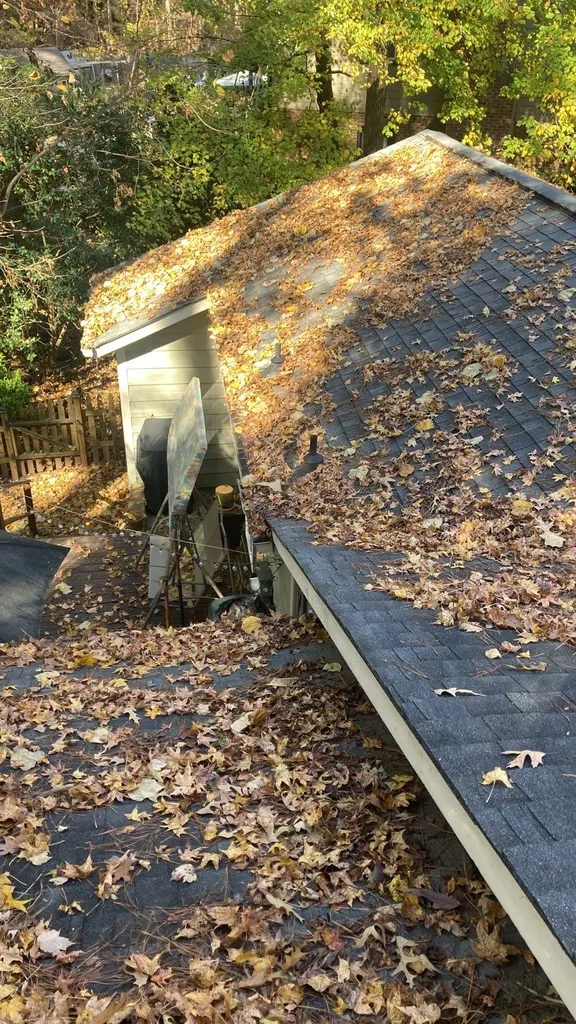
A good rule of thumb: no branches should directly overhang the roof, and for taller trees, keeping them more than 15 to 20 feet from the house is a smart move. That matters a lot here, where willow oaks and pines grow tall and fast and end up leaning over rooflines all over the Triangle.
What damage can trees cause?
Trees close to the house can damage several parts of your roof and the structure underneath. The common issues:
- Shingle damage. Overhanging branches scrape against shingles and wear them out early. Leaves and debris hold moisture and feed moss or algae, which breaks shingles down over time.
- Gutter problems. Leaves, twigs, and seeds clog gutters and downspouts. That blocks drainage and pushes water onto the roof edge, fascia, and soffits.
- Roof penetrations. Vents, pipe boots, and chimneys near branches are more exposed to falling debris during storms, which opens the door to leaks.
- Structural damage. In extreme cases, large limbs or whole trees fall on the roof and damage the decking and framing, which usually means a major repair.
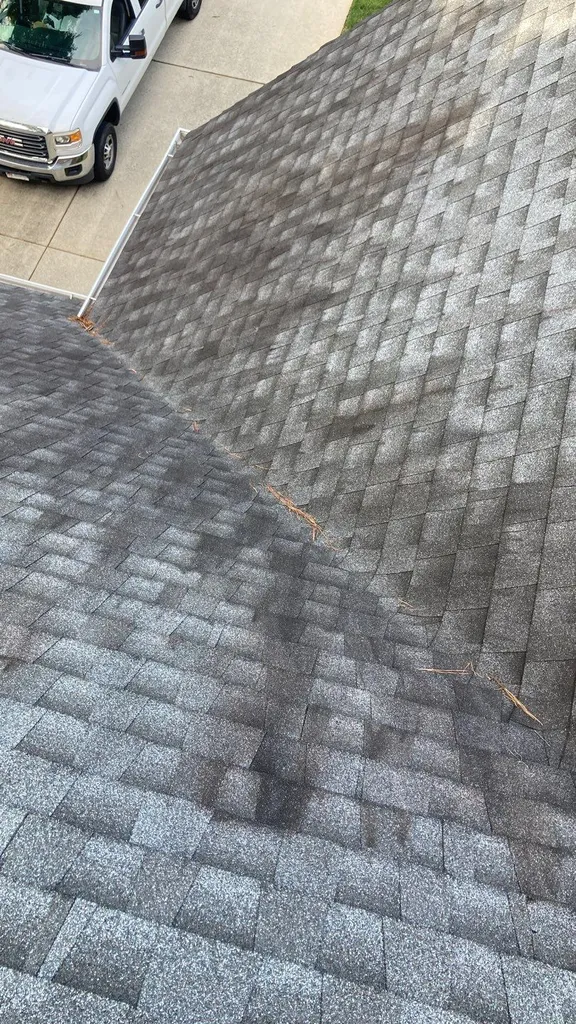
The best ways to prevent these problems are keeping trees a safe distance from the house and staying on top of regular maintenance.
Debris build-up and roof cleaning
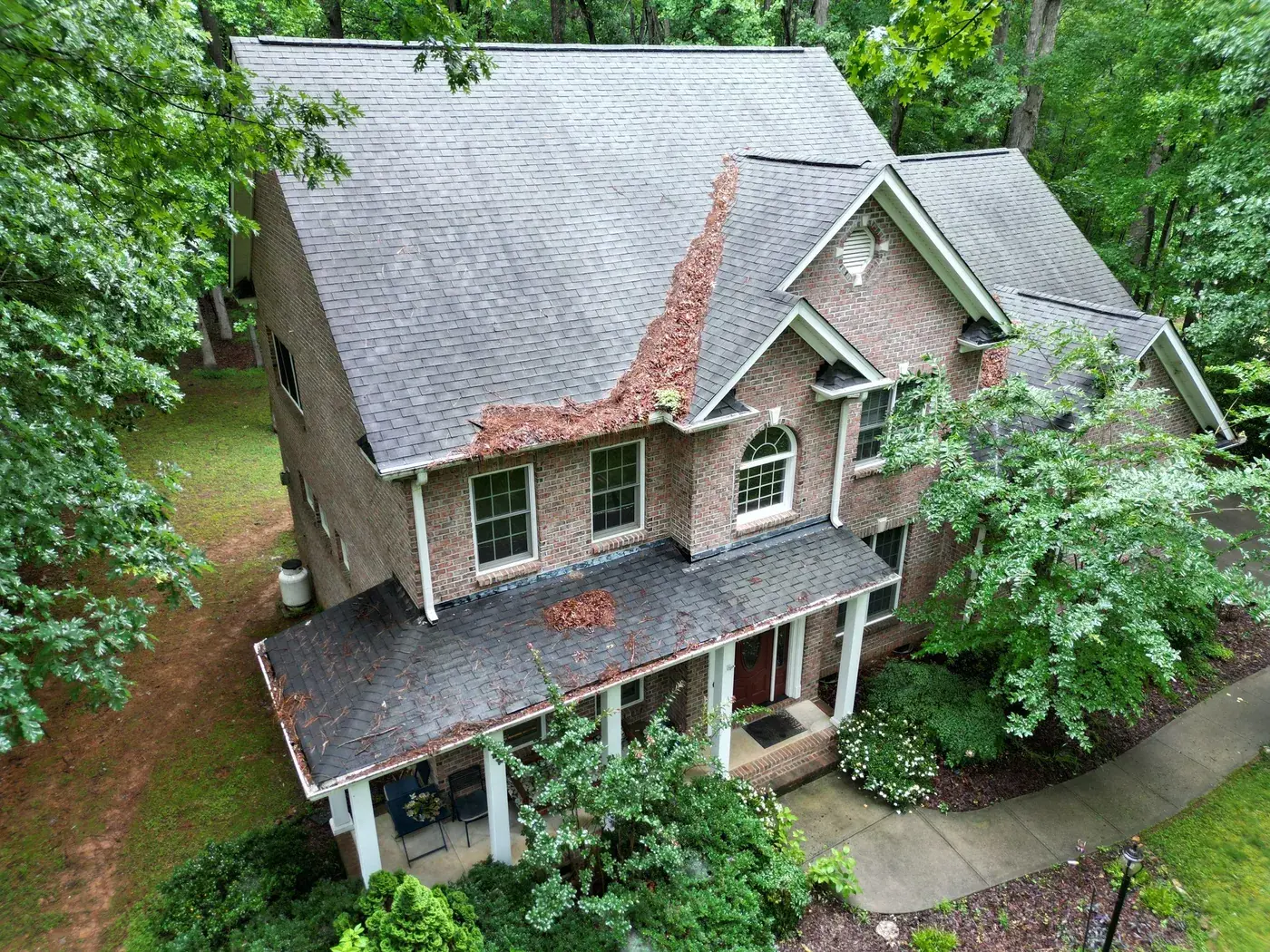
This is the part homeowners overlook most. Leaves, pine needles, and other debris do not just sit harmlessly on the roof. They hold moisture against the shingles, and that trapped dampness is what eventually leads to leaks. In a tree-heavy area, this is not a rare problem, it is the normal pattern if nothing is done about it.
That is why a home surrounded by trees needs the roof cleaned regularly, not just the gutters. We have seen plenty of leaks that could have been avoided if the roof had been kept clear of debris and maintained properly. Pine needles in particular pack into valleys and around penetrations and hold water exactly where you do not want it. Clearing that debris on a regular schedule is one of the cheapest ways to extend the life of a roof under trees.
Gutter clogs from tree debris
Gutter clogs are common enough to be worth a closer look. When gutters fill with leaves, twigs, and debris, they cannot move rainwater away from the roof. Water spills over the sides onto your siding, windows, and foundation. Over time that runoff erodes the soil around the foundation and can cause structural problems.
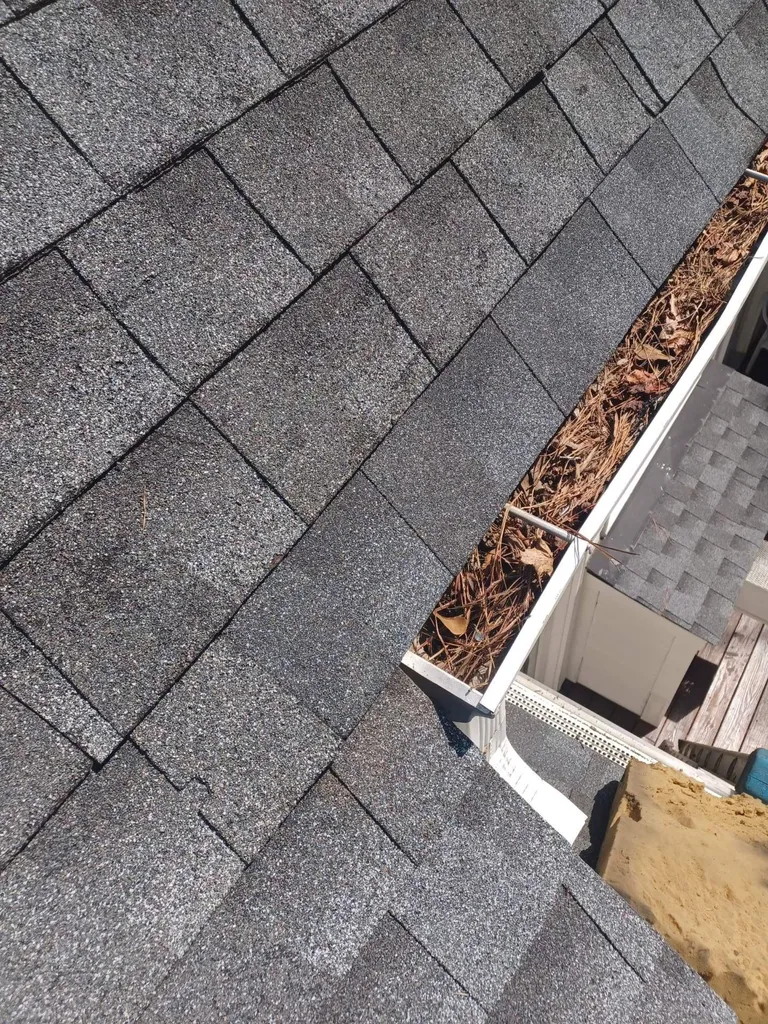
Clogged gutters also let water pool at the roof edge. That standing water can work its way under the shingles and cause leaks, and it feeds mold and mildew that break roofing materials down. The fascia and soffit boards that hold the gutters are especially prone to rot when they stay wet.
The fix is straightforward: clean the gutters regularly, especially in spring when pine pollen and seeds come down and again in fall with the leaves. Trimming overhanging branches and adding gutter guards cuts down how often debris builds up in the first place.
Storm damage from trees
Trees close to the house are a real risk during severe weather. High winds snap or dislodge branches that then drop onto the roof, where they puncture, tear, or dent the roofing and let water in.
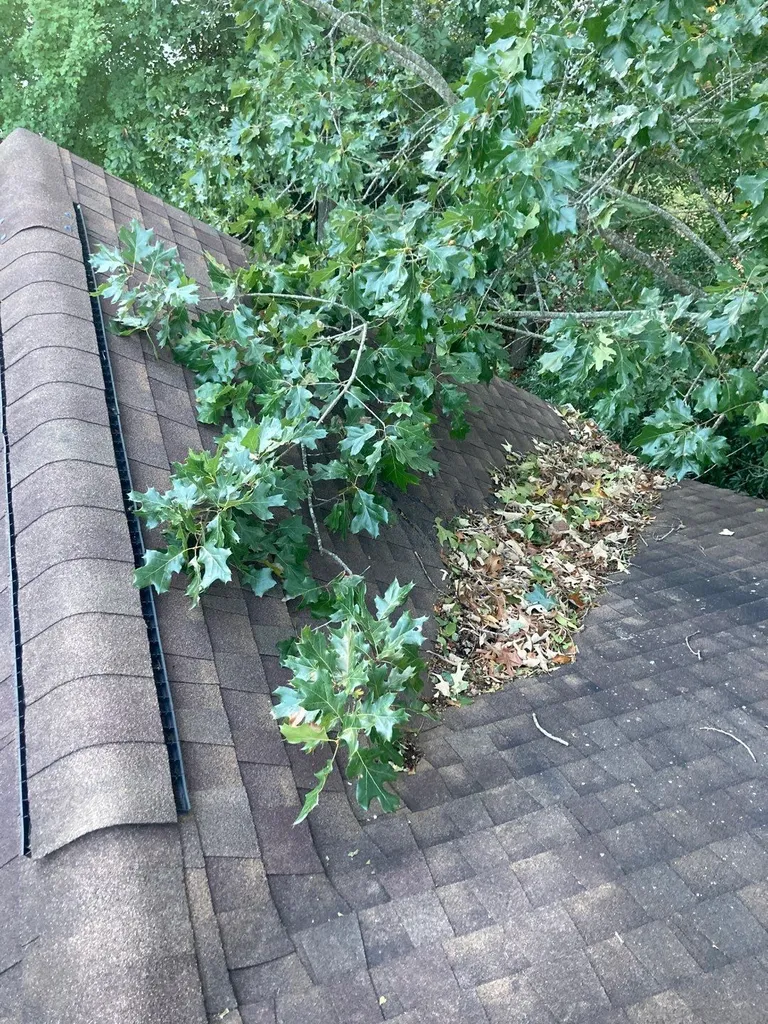
A falling tree can cause severe roof damage and structural problems, and the repairs are costly. Falling limbs also tear up gutters, downspouts, and siding on the way down. In our area the threat is highest during sudden summer thunderstorms and during the tropical systems that push wind and rain into the Triangle late in the season. Those are the storms that turn a leaning tree into a roof claim.
How to deal with trees by your house
The right move depends on the problem in front of you.
For gutter clogs from falling leaves and debris, set a regular cleaning schedule, heavier in spring and fall, or add gutter guards to keep most of the debris out and cut down on how often you are up there.
For overhanging branches, prune them back so leaves and limbs are not landing on the roof and in the gutters. Use a certified arborist or tree specialist for trimming and removal, since that work is dangerous and easy to get wrong. If a tree is diseased, unstable, or likely to fail in a storm, prioritize professional removal before the next big weather event.
It helps to think of it as two jobs. The tree side, trimming and removal, belongs to an arborist. The roof side, inspecting for damage and keeping the roof and gutters clear, belongs to a roofer. Watch for the warning signs of a risky tree too: dead or hanging limbs, a trunk that leans more than it used to, or branches actually resting on the shingles.
Need your roof checked after tree trouble?
If a limb has come down on your roof, or you have trees that have been shedding onto it for years, it is worth having the roof looked at. Tree damage and long-term debris build-up often hide problems you cannot see from the ground.
So far we have covered distance, debris, gutters, and storm risk. To give you a concrete example of what a professional look involves, we can talk about what we do. On Tops Roofing has been working with Raleigh area homeowners since 1991, and our inspections are handled by a certified roof inspector who knows what tree-heavy lots do to a roof over time. That means checking the spots where debris collects, the penetrations near branches, and the areas a falling limb may have weakened, then telling you plainly what the roof needs. Whatever your roof requires, we are on it.
FAQ
How close is too close for a tree to my house?
Any branch directly overhanging the roof is too close. For larger, taller trees, less than 15 to 20 feet from the house is close enough to raise the risk of debris, gutter clogs, and storm-limb damage.
Will trimming branches actually protect my roof?
Yes. Keeping branches off the roof stops shingles from being scraped, cuts the debris landing in your gutters, and removes the limbs most likely to break off and fall in a storm. Use a certified arborist for the trimming.
How often should I clean my roof if I have a lot of trees?
More often than most people think. On a tree-heavy lot, clearing debris from the roof and gutters at least twice a year, in spring and fall, is a reasonable baseline. Pine needles may call for more frequent attention.
Can leaves on the roof really cause a leak?
They can. Piled leaves and needles hold moisture against the shingles and in the valleys, and that constant dampness breaks materials down and eventually lets water in. Keeping the roof clear is a simple way to prevent it.
Should I remove a tree that is close to my house?
Not always. A healthy tree can often be managed with pruning and good maintenance. Removal makes sense when a tree is diseased, unstable, leaning, or clearly likely to fail in a storm. An arborist can tell you which situation you are in.