FORTIFIED Roofing in Wilmington & Coastal North Carolina
A stronger roof, insurance discounts, and up to $6,000 in grant money toward the work. Here is how the program works for homeowners in Wilmington and coastal North Carolina, and how to get started.

A Stronger Roof, Insurance Discounts, and Up to a $6,000 Grant
What if I told you there was a program that could get your roof built well beyond code standards, using proven techniques that prevent up to 95% of storm water intrusion, qualify you for a discount on your homeowners insurance, and, for homeowners in the Wilmington area and other coastal North Carolina counties, come with a grant of up to $6,000 to help pay for it? It is real, and it is called the FORTIFIED roof program.
My name is Jeff Baxter and I am the General Manager at On Tops Roofing, and we install FORTIFIED roofs across North Carolina, including throughout the Wilmington area and the coastal communities where they matter most. I wrote this guide because the program is worth understanding, and most of what gets written about it is built to sell rather than to explain. In this guide I will cover what the FORTIFIED program is, what it requires of your roof, the money it can save you, and how to get started.
The Short Version
If you are looking for a very high-level overview of the FORTIFIED program before we get into the detail, here it is. A FORTIFIED roof is a roof that has been built or replaced to a voluntary standard that goes above and beyond the building code, with the specific goal of making your home far more resistant to storms. The standard was created by the Insurance Institute for Business & Home Safety, and it focuses on the parts of a roof that fail first in high winds, hurricanes, and hail. When you choose to build to this standard and pay the modest additional cost, you generally get three things in return: a stronger and more storm-ready roof, the potential for a discount on your homeowners insurance, and, if you live in the Wilmington area or another eligible coastal county, the possibility of grant money from a state insurance pool to help cover the work.
The rest of this guide explains all of it in plain language. If you only have a minute, here is where to jump: you can read about the three ways it saves you money, understand why the insurance industry is willing to pay you to do it, see which shingles qualify, review the extra requirements for homes near the coast, or skip to how to get one started.
Let's Talk Money First: Three Ways a FORTIFIED Roof Pays You Back
A new roof is a financial decision before it is anything else, and I would rather respect that than bury it at the bottom of the page. Most homeowners researching FORTIFIED want to know one thing first, which is what it can do for them financially. So before we get into how the program works, here are the three ways a FORTIFIED roof can save you money. I cover the grant and the insurance credit in full detail later in this guide, but this is the overview.
1. The Grant, Which Is the Largest Up-Front Savings
For many North Carolina homeowners on or near the coast, the single biggest financial benefit is grant money. Through a state program that I describe in detail below, eligible coastal policyholders can apply for a grant of up to $6,000 toward installing a FORTIFIED roof. What surprises a lot of people is the math behind it. The additional cost of building a roof to the FORTIFIED standard, above and beyond a standard installation, is generally much lower than the grant amount. That means the grant can cover the FORTIFIED upgrades entirely and still put a meaningful amount of money toward the rest of your new roof. You can read the full eligibility rules and how to apply in the grants and insurance section.
2. The Insurance Savings
The second benefit is an ongoing one. North Carolina homeowners who carry wind and hail coverage are often eligible for a reduction in their premium once their roof earns a FORTIFIED designation. This one depends more on your specific policy, so I cannot tell you exactly what you will save, and I would be skeptical of anyone who claims they can without seeing your coverage. What I can tell you is that the credit is real, that it continues year after year for as long as the designation is maintained, and that it is worth confirming with your own carrier.
3. The Storm Damage You Avoid
The third benefit is the hardest to put a number on but is arguably the most important. In a serious storm, a FORTIFIED roof is far less likely to lead to catastrophic damage to your home's structure and its contents. These are exactly the situations that homeowners insurance is designed to handle, so in one sense you are already covered. In practice, though, it is much better to avoid the event altogether than to file the claim. Avoiding a major loss means avoiding your deductible, avoiding the months of repairs and displacement, and avoiding the headache of putting your home back together while you live in it.
Grant money can cover the upgrade and then some, an insurance credit accrues every year you own the home, and you reduce the odds of a catastrophic loss in the first place. For a homeowner who is replacing a roof anyway, those three things together are what make FORTIFIED worth a serious look.
No Free Lunches: Why Is Everyone Giving You Money to Do This?
Any time an industry offers to pay you to do something, it is reasonable to ask why. The answer here is straightforward, and it actually makes the case for the program rather than against it. The FORTIFIED standard meaningfully increases the protection your home has against storms, to the point that the insurance industry would rather help you build this kind of roof than pay out the claim that follows when an ordinary roof fails. According to IBHS, FORTIFIED roofs have performed measurably better than standard roofs in a number of recent hurricanes, including Dorian, Michael, Sally, and Ida. I have intentionally left specific survival percentages out of this guide, because the figures that circulate online are frequently uncited, but the pattern is consistent and well documented.
What IBHS Is, and Why It Exists
FORTIFIED is not a brand of shingle, and it is not a product you can buy off a shelf. It is a construction and re-roofing standard developed by the Insurance Institute for Business & Home Safety, which most people refer to as IBHS. IBHS is a research organization funded by the insurance industry, and it is independent of any single insurer and of the government. Its entire reason for existing is to study why homes are damaged in disasters and to figure out how to prevent that damage, which in turn is how insurers end up paying less in claims. The interests line up in your favor here. A home that survives a storm is better for you, and it is better for the company that insures it.
The reason I trust the standard is that it is not based on opinion or on what sounds reasonable. It is based on testing. IBHS operates a research center where full-scale houses are placed inside a large chamber and subjected to controlled wind, rain, and hail, so that engineers can watch exactly how and where a home begins to fail. That ability to study a real structure under repeatable conditions is what separates this standard from the usual marketing claims about durability.
What the Research Found
The central finding from that research is straightforward. A roof almost always begins to fail at its edges and corners rather than in the middle of the field. Wind gets underneath the edge, lifts it, and then peels back the covering from the perimeter inward. Once the covering is gone, the next problem is water. If the roof deck underneath is not sealed, wind-driven rain pours through the seams between the deck panels and into the attic, the insulation, the walls, and the ceilings below. The visible loss of shingles is often minor compared to the water damage that follows.
FORTIFIED is built around that sequence of events. Each requirement in the standard targets a specific link in the chain, starting with how firmly the roof deck is attached to the house, moving to whether the deck is sealed against water, and then addressing the edges and the covering that take the first hit from the wind. When you understand the order in which roofs fail, the logic of the upgrades becomes obvious, and I will walk through each one in the next section.
It is tempting to believe that a premium shingle is what makes a roof survive a storm. The research points somewhere else. A roof stays on the house because the deck is well attached, the seams are sealed, and the edges are locked down. Those are the details FORTIFIED is built around, and they are the same details that determine whether any roof leaks, storm or no storm.
A Note on Who Runs the Grants
One point worth clearing up early is that the grant money does not come from IBHS. IBHS writes and maintains the standard. The grants are funded and administered by a separate organization, the North Carolina Insurance Underwriting Association, which is the state's coastal insurance pool. That organization adopted the FORTIFIED standard as its requirement, so the grant pays for work that meets the IBHS specification even though IBHS is not the one cutting the check. I cover exactly how that program works in the grants and insurance section.
Inside a FORTIFIED Roof: The Upgrades in Detail
So how does a FORTIFIED roof actually make your home stronger, and what do we do differently when we build one? This is the part of the guide where I can be more useful than most of what you will find elsewhere, because the FORTIFIED requirements are written down in a public standard and on the compliance form that the installing contractor has to sign. I have reviewed both, and I want to walk you through what actually changes on your roof when it is built to this standard.
1. A Stronger Roof Deck Attachment
The roof deck is the layer of wood panels that the rest of the roof is built on. In a great many homes, that deck was originally fastened with smooth nails or staples that were never intended to resist the uplift forces of a serious storm. FORTIFIED requires the deck to be attached, or re-attached during a roof replacement, with ring-shank nails, which have ridges along the shank that grip the wood far more securely than a smooth nail can.
The standard is specific about this. The accepted fastener is a roof sheathing ring-shank nail, designated RSRS-01, that is 0.113 inches in diameter and 2 and three-eighths inches long, complying with ASTM F1667, installed at four inches on center across the entire roof. The nail must penetrate at least one and five-eighths inches into the rafter or truss, so thicker decking may require a longer nail. It is worth clearing up a common point of confusion here. These ring-shank nails fasten the wood deck to the structure of the house. They are not the nails that hold your shingles down, which is a separate requirement I cover under the roof covering.
2. A Sealed Roof Deck
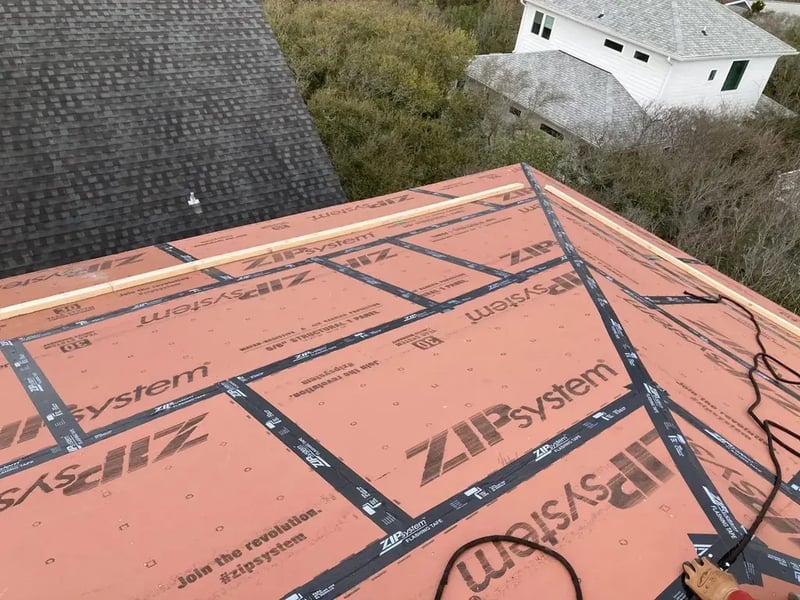
This is the single upgrade that I believe does the most to protect the inside of your home. As I described in the section on the research, the most expensive damage in a storm usually comes from water entering through the seams in the deck after the covering is compromised. A sealed roof deck closes those seams so that even if the covering is lost, water still cannot reach the wood or the rooms below.
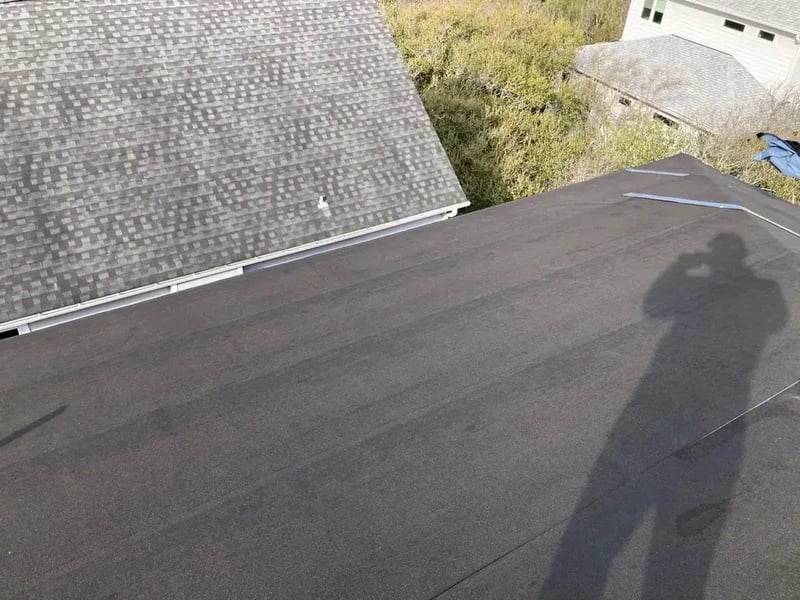
FORTIFIED allows several approved methods to accomplish this, including taping the seams and installing a full layer of underlayment over them, using two full layers of underlayment, or applying a self-adhered membrane across the deck. The right method depends on the roof, but the outcome is the same in every case. You end up with a secondary barrier underneath your shingles, which is exactly the kind of hidden detail that determines whether a roof performs in a real storm. It connects directly to the secondary leak protection I have written about in our roof replacement guide.
3. A Locked-Down Roof Edge
Because the edge is where wind begins its work, FORTIFIED pays close attention to it. The standard requires code-compliant drip edge that extends at least half an inch below the sheathing and at least two inches back onto the roof deck, installed according to the program's published detail. On a FORTIFIED roof, that drip edge is not simply nailed in place. It is bonded down, set into sealant or covered by the self-adhered membrane, so that the edge becomes part of a continuous, sealed system rather than a thin strip of metal that wind can catch and lift.
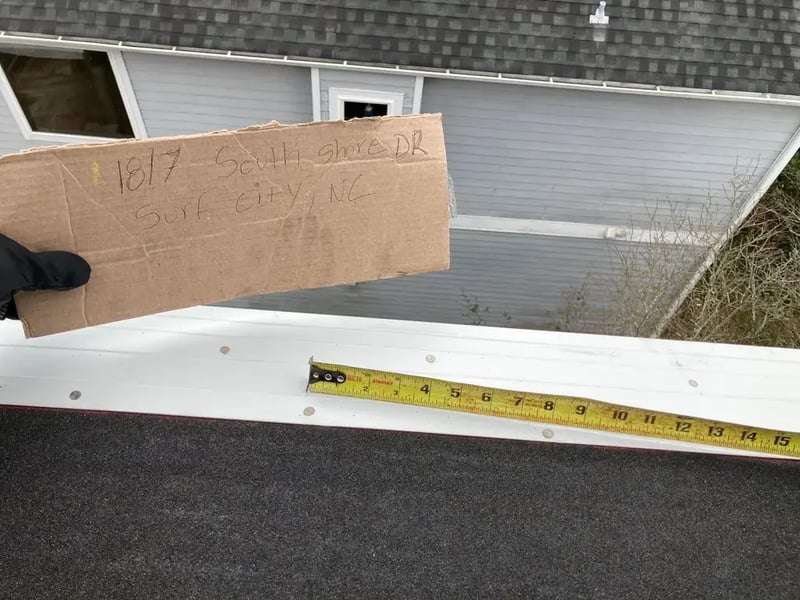
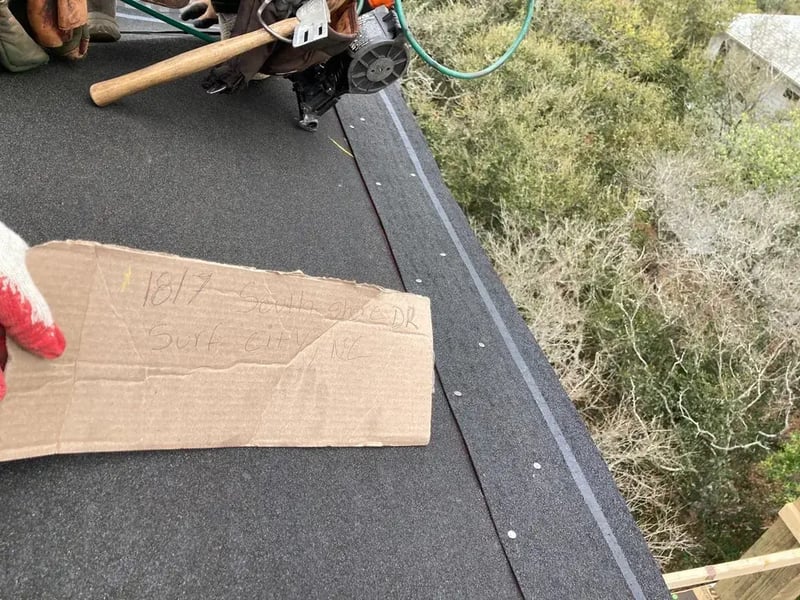
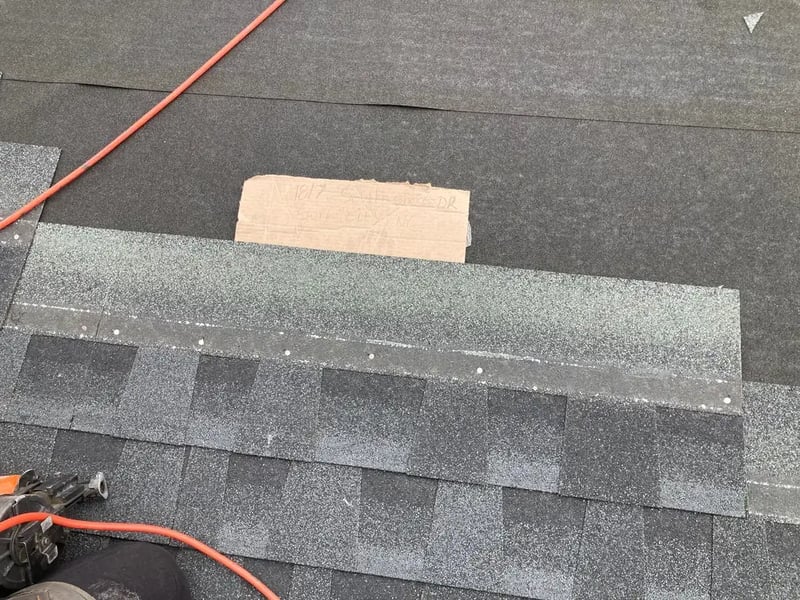
The same thinking applies to the starter course, which is the first row of material at the eaves and rakes that anchors everything above it. FORTIFIED requires the starter to be installed using one of its approved methods, and the most robust of those uses a self-adhering, peel-and-stick starter strip that bonds directly to the sealed edge. The standard also requires new, corrosion-resistant flashing at every place where the roof is interrupted or terminates, such as walls, chimneys, and penetrations. Taken together, these details turn the entire perimeter of the roof into a bonded assembly, which is the part of the roof that fails first when it is done the ordinary way.
4. A Rated Roof Covering, Installed for High Wind
The shingles themselves have to carry a recognized high-wind rating, and they have to be installed according to the manufacturer's instructions for high-wind regions, which usually means a specific nailing pattern and a defined number of nails per shingle. This is the shingle fastening requirement I mentioned above, and it is separate from the ring-shank nails that hold the deck down. I have devoted the next full section to shingles, because the choice of covering is where homeowners have the most questions and where North Carolina has some useful data to draw on.
5. Wind-Rated, Properly Attached Vents
Roof-mounted vents are easy to overlook, but they are an opening in the roof, and in a storm they can become a point of failure. FORTIFIED requires that any roof-mounted vents meet a recognized high-wind testing standard and that they are installed according to the vent manufacturer's high-wind instructions. It is a small detail in the scope of the whole project, but it reflects the thoroughness of the program, which is to leave no obvious weak point unaddressed.
When you put these requirements together, a clear theme emerges. FORTIFIED works because it strengthens the parts of the roof that actually fail first, which are the deck, the seams, and the edges, rather than relying on a premium product to do the work. That is the same lesson we see every day when we investigate leaks, and it is why I am comfortable recommending the standard to homeowners who want their roof to last.
Which Shingles Qualify, and What North Carolina Homeowners Actually Use
One of the most common questions I get about FORTIFIED is whether it requires some kind of special, expensive shingle. For most homeowners the answer is reassuring, because a FORTIFIED roof typically uses the same shingles you would choose for any quality installation. What matters is that the shingle clears the right ratings, and there are two different bars to understand, which will save you a lot of confusion when you are comparing estimates.
The Wind Requirement
For a standard FORTIFIED Roof designation, the covering has to carry a recognized high-wind rating. In practice that means the shingle is rated to either ASTM D3161 Class F, which corresponds to roughly 110 miles per hour, or ASTM D7158 Class H, which corresponds to roughly 150 miles per hour, and that it is installed to the manufacturer's high-wind nailing pattern. The good news for most homeowners is that the quality architectural shingles we install every day already clear this bar without any trouble.
The Hail Requirement
The second bar only applies if you want to add the FORTIFIED Hail Supplement, which is an option that makes sense in parts of North Carolina that see frequent hail. For that supplement, the shingle needs to earn a rating of Good or Excellent on the IBHS Hail Impact-Resistant Shingle Ratings scorecard. This is where the choice of shingle matters, because IBHS buys shingles off the shelf and tests them with realistic hail impacts, and the results vary considerably from one product to the next. It is some of the most useful independent data available to a homeowner, and you can review it directly on the IBHS hail ratings page.
The shingles we most often install on FORTIFIED roofs in North Carolina are GAF Timberline, CertainTeed Landmark, and Owens Corning Duration. These are the standard architectural lines that are stocked everywhere in this market, and they reliably meet the wind requirements while also performing well in IBHS hail testing. Several of the less expensive shingles on the market, including a number of IKO and Tamko products, tend to fall short of what the hail supplement requires, even when they meet the basic wind rating.
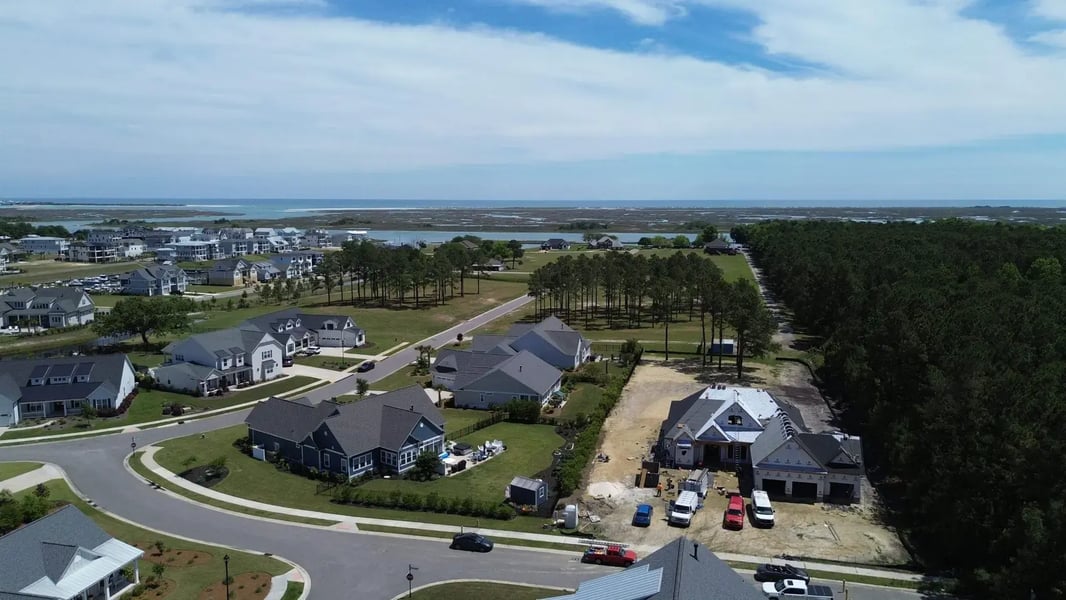
A real example helps. The photo below shows a FORTIFIED roof we installed in Wilmington using CertainTeed Landmark Pro in Charcoal, one of the architectural shingles that meets the FORTIFIED wind requirement. It is a good illustration of the point above, which is that a FORTIFIED roof does not call for anything unusual, just a quality shingle installed the right way.
If you are adding FORTIFIED to a roof replacement, I recommend choosing a shingle that clears both bars rather than just the wind requirement, because the cost difference is usually modest and the hail performance is real protection in our climate. I base that recommendation on the IBHS testing data rather than on brand loyalty, and I am happy to walk a homeowner through the current scorecard so the decision is grounded in the numbers.
The Three FORTIFIED Levels
FORTIFIED Home offers three levels of designation, and they build on one another. You have to meet the requirements of each level before you can move up to the next, so the levels are best understood as a progression rather than as separate choices.
One distinction worth knowing is that FORTIFIED designations are issued along two tracks, one for high wind and one for hurricane conditions, with the hurricane track applying to homes closer to the coast. A separate distinction is whether your designation is earned on a new roof or on an existing roof, and that label carries up through the higher levels as well. For the great majority of homeowners reading this guide, the version that applies is FORTIFIED Roof earned during a roof replacement. Most readers here are replacing an existing roof rather than building a new home, which matters because the coastal grant is aimed at existing homes getting a new roof and does not apply to new construction.
Why You Might Choose a FORTIFIED Roof
If you already need a new roof, or your current roof is approaching the end of its life, FORTIFIED is usually an easy decision. For most asphalt shingle roofs in North Carolina, that point arrives somewhere around fifteen to twenty years, and once you are in that window you are going to be spending money on a roof regardless. Choosing to install a FORTIFIED roof when you already needed a replacement lets you stack the benefits together. You get grant money that can cover the upgrade and more, a new roof either way, an ongoing insurance discount, and real peace of mind when a storm rolls through.
The decision is different if your roof is still relatively young. If your shingles are only five or six years old and in good condition, it rarely makes sense to tear off a perfectly good roof just to earn the designation, and the cost will have far less time to come back to you. There is also no real shortcut here, because sealing the roof deck means getting down to the deck, which means the covering has to come off. In practice, earning a FORTIFIED Roof means replacing the roof, so for a young roof in good shape the honest answer is usually to wait until it is time for that replacement. The sweet spot is the homeowner whose roof is fifteen years or older and who is already weighing a replacement, because for that person FORTIFIED adds protection and financial upside to a project they were going to take on anyway.
If your roof is more than fifteen years old, or you are replacing it for any reason, FORTIFIED is worth serious consideration, and it is worth even more if you live in a county where the grant applies. If your roof is young and healthy, there is usually no rush, and the smarter move is to plan for FORTIFIED when the replacement does eventually come.
What Coastal North Carolina Homeowners Need to Know
If your home is on or near the coast, FORTIFIED is not just a stronger option, it is the standard that was practically designed for your situation. There are a few considerations that apply specifically to coastal homes, and they are worth understanding before you start.
The most important is the program's corrosion requirement. If your home is within three thousand feet of saltwater, the FORTIFIED standard requires that the fasteners and connectors used on your roof meet specific corrosion protection requirements, because salt air degrades ordinary metal far faster than inland conditions do. This is the kind of detail that an experienced coastal contractor will already be planning for and that an inland crew working near the water for the first time might miss entirely. It is one of several reasons that choosing a contractor who knows the standard matters more near the coast than almost anywhere else.
Coastal homes also sit in higher design wind zones, which affects everything from the required ratings to the way the roof is fastened. Communities around the Wilmington area, Brunswick and New Hanover counties, and the Outer Banks face exposure that simply does not exist in the middle of the state, and the FORTIFIED requirements scale up accordingly.
FORTIFIED in the Wilmington Area
Few places in North Carolina make the case for FORTIFIED as plainly as the greater Wilmington area. Homes in Wrightsville Beach, Carolina Beach, and Kure Beach sit right on the water, and neighborhoods across Wilmington itself, from Landfall and Mayfaire to Ogden, Porters Neck, and Masonboro, are close enough to feel the full force of a coastal storm. The same is true just outside the city, in Leland and Belville over in Brunswick County and in Hampstead and the Surf City and Topsail area in Pender County. For the beach communities in particular, that closeness to the water also triggers the corrosion-resistant fastener requirements we covered above, which is one more reason to work with a contractor who builds to the standard regularly.
There is a financial angle to the geography as well. If your home is in New Hanover, Brunswick, or Pender County, you are not only in prime FORTIFIED territory, you are also in one of the counties covered by the Strengthen Your Coastal Roof grant, so up to $6,000 may be available toward the work. I cover the grant in detail in the next section.
A Coast That Knows Storms
This stretch of coast has a long memory when it comes to hurricanes. Hurricane Florence came ashore at Wrightsville Beach in September 2018 and left much of Wilmington flooded and, for a time, cut off by high water. Hurricane Isaias made landfall in Brunswick County, near Ocean Isle Beach, in August 2020. Before them, Hurricane Fran in 1996 and Hurricane Floyd in 1999 each drove through the Cape Fear region and pushed damage well inland. Storms like these are exactly what the FORTIFIED standard was built to withstand, and they are the reason the protection matters as much here as anywhere in the state.
The upside is that the same exposure that makes the standard necessary is also what makes grant money available, which brings us to the next section.
Grants and Insurance: How the Money Works
Earlier I gave you the overview of the three ways a FORTIFIED roof saves you money. This is the detailed version, covering exactly how the grant works, who qualifies, and how the insurance credit is applied.
The Strengthen Your Coastal Roof Grant
North Carolina runs one of the more generous grant programs in the country for this purpose, administered by the North Carolina Insurance Underwriting Association, which most people know as the coastal insurance pool. Through the Strengthen Your Coastal Roof program, eligible policyholders can apply for a grant of up to $6,000 toward the installation of an IBHS FORTIFIED Roof. The program covers the coastal counties above the Intracoastal Waterway, which include Beaufort, Brunswick, Camden, Carteret, Chowan, Craven, Currituck, Dare, Hyde, Jones, New Hanover, Onslow, Pamlico, Pasquotank, Pender, Perquimans, Tyrrell, and Washington.
To use the grant, you check your initial eligibility with your policy number and mailing zip code, submit a few exterior photos of your home, and complete an application before any work begins. That last point is important, because the grant is structured around using a participating contractor and an assigned evaluator from the start, so this is not something to apply for after the fact. You can begin at the Strengthen Your Coastal Roof website, read through the details on the grant page, or call the program directly at 1-877-472-6862.
There is a companion program, called Strengthen Your Roof, that serves the areas east of the Intracoastal Waterway and the Outer Banks and barrier islands. If you live in one of those areas and the coastal program tells you that you are not eligible, you are most likely looking at the wrong one. You can find the companion program at strengthenyourroof.com, and the same NCIUA team can point you to the right application.
The Insurance Credit
Beyond the grant, a FORTIFIED designation can reduce the wind and hail portion of your homeowners insurance premium. The credit is applied by your insurance carrier once you provide your FORTIFIED certificate, and the amount depends on your carrier, the level of designation you earned, and where your home is located. Because the specifics vary, the right move is to confirm the available credit with your own insurer before you start, and to make sure they have your certificate on file once the work is complete.
When you put the grant and the credit together, the way to think about the value of a FORTIFIED roof is as a combination of the grant that offsets the upfront cost, the annual insurance credit that accumulates over the years you own the home, the storm damage you are far less likely to suffer, and the transferable designation that adds value when you sell. I would rather give you that framework than invent a single payback number, because the honest answer depends on details that are specific to your home and your policy.
What a FORTIFIED Roof Costs
Once homeowners understand the benefits, the next question is always what it costs. Let me give you a realistic way to think about it, along with the factors that move the number up or down.
For the most common scenario in North Carolina, an asphalt shingle roof using standard architectural shingles, building to the FORTIFIED standard typically adds about ten percent to the cost compared with the same roof installed without it. That premium pays for the work we walked through in the upgrades section, including re-nailing the deck with ring-shank nails, sealing the deck, bonding down the edge and the starter, and the documentation and third-party evaluation the designation requires. Ten percent is a useful planning number for the typical project, though your exact figure will depend on the details of your roof.
Use Our Pricing Calculator
If you want a quick ballpark before you talk to anyone, we built a pricing calculator on our pricing page that will give you a good idea of what a standard roof replacement runs on a home like yours. To estimate a FORTIFIED version, run your numbers there and add roughly ten percent. It will not replace a real estimate, but it is an honest starting point.
What Actually Drives the Price
By a wide margin, the largest single factor in the cost of any roof is its size. A bigger roof simply needs more material and more labor, and that drives the total more than anything else. After size, a handful of other factors move the number:
- The covering you choose. If you move from asphalt shingles to a metal roof, and particularly to an aluminum standing seam system, the cost rises substantially. That single choice will affect your price far more than the FORTIFIED upgrade itself.
- Height and stories. A taller home is harder and slower to work on safely, and that labor shows up in the price.
- Pitch and complexity. Steep slopes, multiple valleys, dormers, and other intersections all add labor and detail work compared with a simple, walkable roof.
- Coastal corrosion requirements. Within three thousand feet of saltwater, the corrosion-resistant fasteners and connectors the standard requires can add a modest amount to the cost.
The Most Accurate Way to Know
As with any roof, the most accurate way to understand your cost is to get written estimates from three reputable contractors and compare them carefully. Make sure each one is quoting the same scope, the same designation level, and the same covering, so you are comparing like with like rather than chasing the lowest number. The contractor selection questions earlier in this guide will help you decide whose estimate to trust.
If you are in an eligible coastal county, keep in mind that the grant of up to $6,000 is generally more than the ten percent FORTIFIED premium on a typical asphalt shingle roof. In other words, the program can often cover the entire upgrade and still put money toward the rest of your replacement.
How to Get a FORTIFIED Roof
The process can sound involved, but it follows a logical order, and a good contractor handles most of it on your behalf. Here is how it works from start to finish.
It begins with an inspection, where you and your contractor decide which designation level makes sense for your home, with FORTIFIED Roof being the usual answer. A third-party FORTIFIED Evaluator is then involved to verify the work, and it is worth emphasizing that the evaluator is independent of the contractor, which is part of what gives the designation its credibility. During the installation, the contractor documents the work with date- and location-stamped photographs that correspond to each requirement on the compliance form, because the program requires proof that what was installed matches the standard.
When the roof is complete, the contractor fills out and signs the roofing compliance form, and the evaluator reviews the documentation and submits it for designation. Once it is approved, you receive your FORTIFIED certificate, which is valid for five years, after which it can be renewed. The final step is on you, which is to submit that certificate to your insurance carrier so the credit can be applied, and if you used the coastal grant, to complete the program's paperwork. We handle the documentation and coordination for our customers, so the part that falls to you is mostly providing the certificate to your insurer.
Choosing a FORTIFIED Contractor in North Carolina
As I argued at length in our roof replacement guide, the contractor you choose has more influence over how your roof performs than any product decision you will make. That is even more true with FORTIFIED, because the standard depends on hidden details being executed correctly and documented honestly. The good news is that the verification process gives you a natural set of questions to ask.
Start by confirming that the company is a licensed General Contractor in North Carolina and carries general liability insurance, the same baseline I recommend for any roof replacement. From there, ask whether they are trained and certified to install FORTIFIED roofs, who the third-party evaluator on your project will be, and whether they will show you the photo documentation and the signed compliance form for your specific roof. A contractor who works to this standard regularly will be comfortable answering all of these, because the documentation is simply part of how the job is done.
On Tops Roofing has served North Carolina homeowners since 1991, we are a licensed General Contractor, and we have installed and replaced more than fifteen thousand roofs across this market. That combination of longevity and volume is what allows us to execute the FORTIFIED details consistently and to stand behind the work over the long run.
Frequently Asked Questions
Does a FORTIFIED roof actually improve how my home performs in a storm?
Emphatically, yes. It absolutely helps. The main way it protects you is by reducing the chance that a storm strips the roof covering, whether that is shingles or metal, off the house in the first place. Just as important, if you do lose some covering in a very high wind event, the sealed roof deck dramatically reduces how much water gets into your home. That is the whole point, which is to mitigate the damage. If a handful of shingles blow off an ordinary roof, water can pour through the deck seams and leave you with ruined ceilings, insulation, and walls. With a FORTIFIED roof, that same event is far more likely to be a minor repair than a major loss. Reducing damage is exactly what your insurance company cares about, and it is what spares you the deductible and the months of disruption that come with a serious storm.
Is a FORTIFIED roof worth it in North Carolina?
For most homeowners who are already replacing a roof, and especially for those on or near the coast, it is worth it. The combination of grant money in eligible counties, an ongoing insurance credit, far better storm performance, and a designation that transfers when you sell tends to make the case on its own. The decision is closer if you expect to move within a year or two and you are not in a grant-eligible county.
How much more does a FORTIFIED roof cost?
It depends on your home and the level you choose, but the added cost of a FORTIFIED Roof on top of a standard replacement is modest relative to the project as a whole, and it is far lower when added during a replacement than as a standalone retrofit later. In the coastal counties, that added cost is generally well below the grant amount, which is why the grant can cover the upgrade and still contribute toward the rest of the roof. I prefer to give a specific figure after seeing the roof rather than quoting a range that may not fit your situation.
Does it actually lower my insurance?
It can. North Carolina homeowners with wind and hail coverage are often eligible for a premium credit once their roof is designated, but the amount depends on your carrier, your location, and your designation level, and it is applied only after you submit your certificate. The right step is to confirm the credit with your own insurer.
Does FORTIFIED cover metal roofs?
Yes. FORTIFIED applies to metal roofs, and if you have a combination roof with both shingle and metal sections, it covers the metal portions as well. Metal roofing has its own set of requirements that follow the same principles as the shingle standard, including a sealed roof deck, sealed edges, strong panel attachment, and hail protection, so I will not get deep into the specifics here. The short version is that the metal panels have to be part of a tested system with a certified design pressure rating, installed over continuous decking and one of the approved sealed-deck underlayments, and the panel attachment, meaning the clips or fasteners and how far apart they are spaced, is determined by the wind loads for your location. For a standing seam roof, that means the panels and their fastening have to match the certified, tested assembly rather than being improvised on site. For hail coverage, the metal panels also have to carry a UL 2218 Class 4 impact rating. If you are considering metal and want it to qualify, the most important move is the same one I recommend throughout this guide, which is to use a contractor who knows the standard.
How long does the designation last?
A FORTIFIED designation is valid for five years, after which it can be renewed. The designation stays with the home rather than the owner, so it carries over if you sell.
Is FORTIFIED required by building code?
No. Building code is the minimum standard intended to keep a home from collapsing. FORTIFIED is a voluntary standard that goes above code with the specific goal of keeping the roof on and the water out. Meeting code does not make a roof FORTIFIED.
Can an existing roof qualify, or do I need a full replacement?
In practice you need a roof replacement. The central FORTIFIED upgrade is sealing the roof deck, and there is no way to do that without removing the existing covering to get down to the deck. That is why the right time to earn a FORTIFIED Roof is when you are replacing your roof anyway, so the required work happens as part of a job you were already doing.
Are the grants available for new construction homes?
No. The North Carolina grant money is tied to existing homes that already carry a qualifying NC insurance policy and meet the program's criteria, so it is not available for new construction. If you are building a new custom home, you can absolutely still build it to the FORTIFIED standard, and you should expect the same insurance savings and storm protection that any FORTIFIED roof provides. You simply will not be able to claim the up to $6,000 grant, because that program is designed for existing coastal policyholders rather than new builds.
Do I need a FORTIFIED roof if I live inland rather than on the coast?
It is most compelling on the coast, but inland North Carolina sees hurricanes that track inland, frequent severe thunderstorms with damaging wind, and regular hail, so the protection is meaningful well away from the water. The grant programs, however, are specific to the coastal counties, so the financial picture is different inland.
Do you install FORTIFIED roofs in the Wilmington area?
Yes. We work throughout the Wilmington area and the surrounding coastal communities, including Wrightsville Beach, Carolina Beach, Kure Beach, Leland, Hampstead, and the Surf City and Topsail area, across New Hanover, Brunswick, and Pender counties. Because these are exactly the conditions FORTIFIED was designed for, it is one of the markets where we most often recommend it.
Which Wilmington-area homes qualify for the coastal grant?
The Strengthen Your Coastal Roof grant covers the coastal counties above the Intracoastal Waterway, and that includes New Hanover, Brunswick, and Pender, the three counties that make up the greater Wilmington area. To qualify you need a qualifying North Carolina coastal insurance policy and have to meet the program's criteria, and you apply before the work begins. You can check your eligibility directly on the Strengthen Your Coastal Roof website.
Thinking About a FORTIFIED Roof?
On Tops Roofing has been helping North Carolina homeowners make smart roofing decisions for over 30 years. Schedule a free, no-obligation inspection and we'll walk you through your options, including FORTIFIED and any grants you may qualify for.
Schedule Your Free InspectionSources and Downloads
Everything in this guide is drawn from the FORTIFIED program's own published materials and from the organizations that administer the standard and the grants. If you want to read the source documents yourself, the links below will take you to the authorities, and I have noted the official program documents that you can download.
The Authorities
- Insurance Institute for Business & Home Safety. The organization behind the standard and its research, at ibhs.org, with the consumer-facing FORTIFIED program at fortifiedhome.org.
- IBHS Research Center. The lab where the testing happens, at ibhs.org/about-ibhs/ibhs-research-center.
- IBHS Hail Impact-Resistant Shingle Ratings. The independent hail scorecard referenced in the shingle section, at the IBHS hail ratings page.
- Verify a designation. You can confirm a property's current FORTIFIED status through the IBHS FORTIFIED address lookup.
- Strengthen Your Coastal Roof. The NCIUA grant program at strengthenyourcoastalroof.com, with its companion program at strengthenyourroof.com.
Official Program Documents
- 2025 FORTIFIED Home Standard, the full technical standard for the program.
- FORTIFIED Roof Contractor Handbook, covering contractor certification and responsibilities.
- FORTIFIED Roofing Compliance Form (RCF1), the compliance checklist a contractor completes for an asphalt-shingle FORTIFIED roof.
- FORTIFIED Flashing Guidelines for Steep-Sloped Roofs, the program's flashing detail reference.
- IBHS Hail Impact-Resistant Shingle Ratings Scorecard, the current ratings used to choose a hail-rated shingle.