Roof replacement
Not sure if your roof decking needs replacing? Learn what decking is, the signs it needs to go, and why it can be a surprise cost at tear-off.

Do you need to replace your roof decking?
You need to replace roof decking when it shows water damage or rot, when board decking has gaps wider than about an eighth of an inch, when it cannot support new materials, or when your warranty requires it. Sound decking can usually stay, but any that is soft or damaged has to be replaced so the new roof has a solid base.
Key takeaways
- Roof decking is the wood layer that all your roofing materials attach to.
- It is usually plywood or OSB sheets, or older solid-wood boards.
- Water damage, rot, wide board gaps, and weight limits are the main reasons to replace it.
- Because it hides under the shingles, decking damage is often found only at tear-off.
- Only the bad sections are replaced, so you are not paying for a whole new deck unless it needs it.
Understanding the parts of your roof helps you feel confident during a replacement, and decking is one that catches homeowners by surprise. In short, the roof decking is the layer of wood that every other roofing material is nailed down to. It sits on your home's frame and gives the shingles a solid, flat base to protect. Below, we explain what it is and how to tell when it needs replacing.
What is Roof Decking?
Roof decking, also called sheathing, is the layer of material that covers the structural supports of your roof and gives the roofing materials something to attach to. It spreads the weight of the roof evenly, adds structural support, and acts as a barrier that helps keep water out of your home.
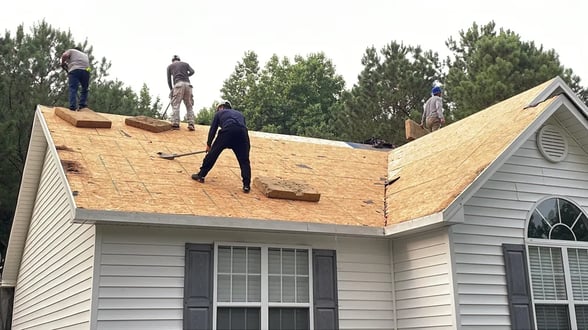
Most decking is made of plywood or oriented strand board, known as OSB. Plywood is built from thin layers of wood veneer glued together, with each layer set perpendicular to the last for added strength. OSB is made by compressing and bonding wood strands with resin. Both are engineered to handle roofing conditions and provide a solid base for the roof above.
How to Know If You Need to Replace It
A few questions help you and your roofer figure out whether the decking needs to be replaced. Is there water damage? Is it boards or sheets, and if boards, are the gaps too wide? Will it support the weight of the new materials? And does your warranty require new decking? We will take each in turn.
Water Damage
The most common sign decking needs replacing is water damage. In the attic or crawl space, look at the underside of the decking for stains, discoloration, or soft, rotted spots. This kind of damage comes from roof leaks, bad flashing, or poor ventilation. When you see it, it needs to be dealt with promptly, since wet decking keeps deteriorating and can spread to the framing underneath.
Boards or Sheets
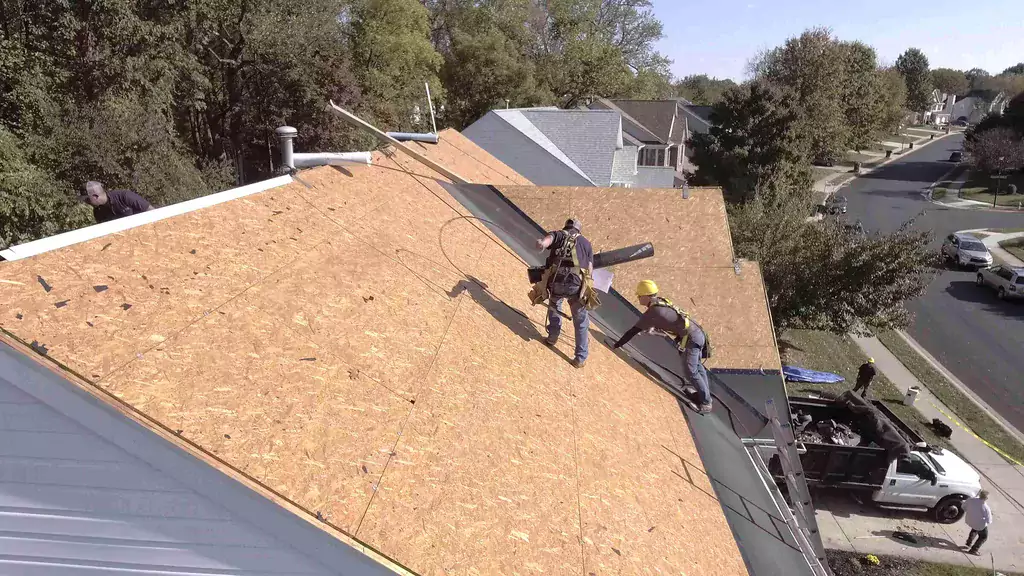
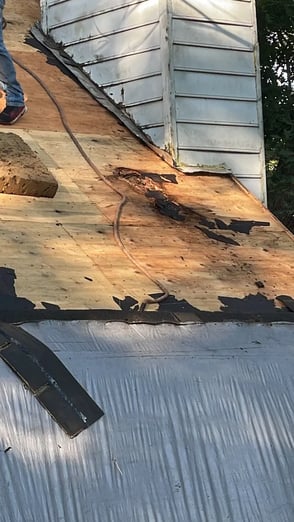
Decking is installed either as individual boards or as large sheets. Board decking uses overlapping solid-wood planks nailed to the trusses or rafters, and it is common on older homes. Sheet decking uses large plywood or OSB panels, usually four feet by eight, laid in a staggered pattern for a smooth, continuous surface, which is standard on newer homes.
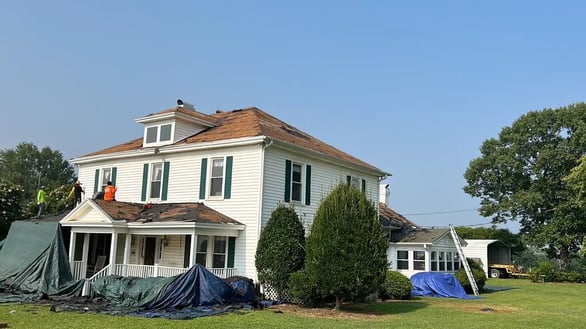
Whether you have boards or sheets affects how repairs are handled. With board decking, a roofer can often replace just the damaged planks, while a badly damaged sheet usually has to be swapped out whole. On a board deck, it is also worth checking the gaps between the planks, since a small gap of about an eighth of an inch is normal and left on purpose so the wood can expand and contract with temperature. Larger gaps are a sign the boards have shifted or deteriorated over time, and those sections often need to be replaced or covered before the new roof goes on.
Supporting New Materials
If you are moving to a heavier material, like some tile or premium shingles, the existing decking has to be able to carry the extra weight. Older or weakened decking may not, and installing a heavy roof over it can lead to sagging or worse. In that case, replacing the decking is what keeps the roof structurally sound.
Warranty Requirements
Some manufacturer warranties require sound decking, and occasionally new decking, for the coverage to be valid. Manufacturers set installation standards, and meeting them can mean replacing decking that is not up to par. If a strong warranty matters to you, it is worth confirming what the manufacturer requires before the job starts.
Why Decking Is Often a Surprise Cost
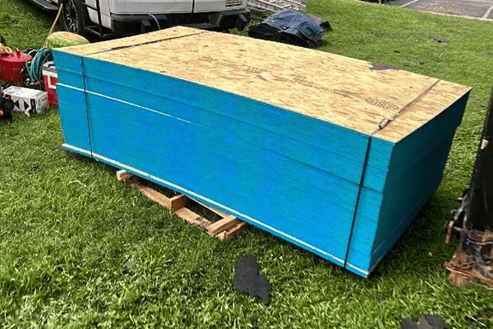
Decking is the one part of a replacement that often surprises homeowners on the bill. It sits under the shingles, so no one can see its true condition until the old roof comes off. A roofer can look for signs from the attic and give you a solid estimate, but the full picture only appears at tear-off, and that is when hidden rot or soft spots show up.
Because of this, most roofers price decking replacement separately, often per sheet or per board, and note it as a possible add-on in the estimate. It is not a hidden fee. It is a cost that genuinely cannot be measured until the roof is torn off. A good contractor explains this upfront, shows you any bad decking they find before replacing it, and only swaps out the sections that actually need it, so you are not paying for a whole new deck when a few sheets will do. At On Tops Roofing, we have spelled out decking costs for Raleigh-area homeowners this way since 1991, so you have a clear picture of the cost before the work begins.
FAQ
What is roof decking?
Roof decking, or sheathing, is the layer of wood, usually plywood or OSB, that covers your roof's structural supports and gives the shingles and other materials a solid base to attach to. It also helps spread the roof's weight and keep water out.
How do I know if my roof decking needs to be replaced?
The main signs are water stains or rot on the underside of the decking, wide gaps between older boards, and decking too weak to carry new materials. Some warranties also require sound or new decking. A professional can assess it from the attic and confirm at tear-off.
Does all the decking need to be replaced, or just part?
Usually just the damaged sections. A good roofer replaces only the boards or sheets that are rotted or compromised, not the entire deck, unless the damage is widespread. That keeps the cost tied to what actually needs fixing.
Why did decking show up as an extra cost on my estimate?
Because decking hides under the shingles, its condition is not fully known until the old roof is torn off. Roofers price it separately, often per sheet, and flag it as a possible add-on. It is a real cost that cannot be measured beforehand, not a hidden fee.
What causes roof decking to rot?
Moisture, usually from roof leaks, failed flashing, or poor attic ventilation. In North Carolina's humidity, trapped moisture is a common culprit, which is one more reason good ventilation and prompt leak repairs protect the whole roof.