Roof Repair
Pipe boots, shingles, gutters, flashing, and attic ventilation are the most common roof repairs in Raleigh, NC. Learn what goes wrong in each.

What are the most common roof repairs in Raleigh, NC?
The five types of repairs we see most in the Raleigh area are damaged shingles, flashing, and gutters, cracked pipe boots, and improper attic ventilation. NC heat and humidity do more damage to a roof than storms, which surprises most homeowners who assume a roof only fails when weather hits it.
Key takeaways
- Cracked rubber pipe boots allow water to leak straight into an attic and are difficult to spot from the ground.
- Shingle damage is not always storm-related. Improper installation, including misplaced nails, can cause problems years later.
- Pine needles, leaves, and other debris can quickly clog gutters, adding unnecessary weight and strain to the system.
- Improperly installed or deteriorating flashing is a common source of roof leaks.
- Attic ventilation needs balanced intake and exhaust, so adding vents can make a hot attic worse.
After enough years working on Triangle roofs, you start recognizing the same handful of failures turning up again and again. Summer heat sits on south-facing slopes for months at a time, storm lines push through in spring and early summer, and pine pollen settles into every gutter run. None of it is dramatic, which is part of the problem. These roofs fail slowly, in small places, and usually somewhere you cannot see from the curb.
On Tops Roofing has repaired roofs across the Triangle since 1991. Here are five repairs our crews handle most weeks, and what goes wrong in each one.
- Shingle replacement
- Pipe boot replacement
- Gutter repairs
- Flashing repairs
- Attic ventilation fixes
- What these repairs mean for your insurance
- FAQ
Shingle Replacement
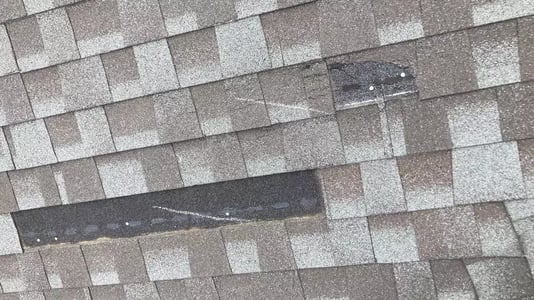
Most shingle damage we see started long before anyone noticed it, usually with a nail that went in too high or too shallow when the roof was installed. That causes the tab to never seal down properly. So when the first real wind comes through, it gets underneath and works the shingle loose. Hail can cause damage quickly, especially when colder temperatures make asphalt shingles less flexible and more susceptible to cracking. Heat takes a slower toll. On slopes that get the most afternoon sun, years of exposure can gradually wear down the shingles and loosen granules, which may eventually collect in the gutters.
A repair starts with pulling damaged shingles and taking a look at the decking underneath, because soft or wet sheathing can turn a small job into a bigger one. Laying new shingles over bad decking only buys you a season or two. Once the decking checks out, new shingles go on. A good crew blends the new shingles into the old ones around them.
Blending gets harder every year a roof ages. Granule color fades, manufacturers discontinue older shingle lines, and the patch starts announcing itself from the street. Once damage has spread across two or three slopes, one replacement usually costs less over a few years than a string of separate repairs.
Pipe Boot Replacement
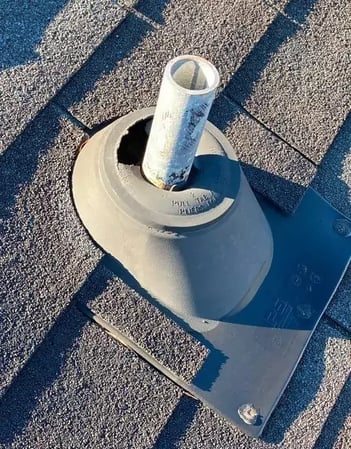
A pipe boot is a rubber collar sealing the spot where a plumbing vent comes up through your roof. That vent sits in a hole cut clean through the decking, so it is the only thing standing between rain and your attic insulation.
Builders almost always use a cheap synthetic version, and NC sun goes to work on it immediately. Somewhere around year eight to twelve, the rubber dries out and splits right where it wraps the pipe. A surprising share of Raleigh leaks we chase down end at one of these, and homeowners are usually a little annoyed to hear it, because a boot costs almost nothing to replace while the damage underneath rarely does.
Gutter Repairs
Gutters are not strictly roofing, though they protect your roof edge and they land on our repair list about as often as anything else. Triangle homes sit under heavy pine and oak, and one season of falling leaves is enough to pack a gutter run solid.
From there it becomes a weight problem. Standing water is heavy, and it pulls hangers away from the fascia until whole sections start sagging. Water also backs up under the first course of shingles, where a drip edge should be sending it away from the wall instead. Summer storms finish the job, dropping limbs that dent sections and pull seams apart.
Two cleanings a year prevent nearly all of this. Gutter guards are useful on a wooded lot, and cutting back branches that overhang your roof reduces both debris and impact damage.
Flashing Repairs
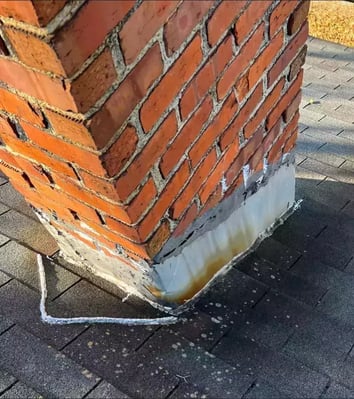
Flashing is the metal used to protect areas where shingles alone cannot keep water out, including around chimneys, walls, valleys, and dormers. Because flashing has to be shaped and installed to fit each transition, proper installation is especially important.
Weather can damage flashing over time, but many of the leaks we see are related to installation. One common issue is relying on sealant in an area that should have been protected with properly installed flashing. Caulk may stop water temporarily, but as it deteriorates, moisture can begin working its way behind the roofing or siding.
Flashing leaks should be addressed quickly because these areas are designed to direct water away from some of the roof’s most vulnerable transitions. When they fail, water can make its way inside and may go unnoticed until signs of a leak appear indoors.
Attic Ventilation Fixes
A poorly ventilated attic can trap a lot of heat and moisture during a North Carolina summer. Over time, those conditions can contribute to premature shingle wear, moisture problems in the roof decking, and higher cooling costs.
Good attic ventilation is all about balance. The system needs enough intake ventilation, typically through the soffits, along with enough exhaust ventilation near the top of the roof. The amount needed is based on the size of the attic floor, not the surface area of the roof.
One of the biggest mistakes we see is adding more exhaust vents without checking whether there is enough intake air to support them. More vents do not necessarily mean better ventilation. Sometimes the solution is as simple as clearing blocked soffit vents and allowing the existing system to work the way it was designed.
What These Repairs Mean for Your Insurance
Keeping up with smaller roof repairs has become even more important as insurance costs continue to rise. Under a settlement with the North Carolina Department of Insurance, average statewide homeowners insurance base rates increased 7.5% in June 2025 and another 7.5% in June 2026.
Insurance companies also consider factors such as the condition of the home and its claims history when evaluating coverage and premiums. That makes it worth understanding the extent of the damage before deciding whether an insurance claim makes sense.
For a smaller repair, the cost may be close enough to the deductible that filing a claim offers little benefit. More extensive storm damage may be a different situation. Every policy is different, so homeowners should review their coverage and deductible and talk with their insurance agent before making that decision.
Taking care of small roofing problems early can help prevent them from becoming much larger repairs later.
Getting Ahead of Your Next Repair
Small roofing problems rarely stay small. A leak that starts around a pipe boot, flashing, or damaged shingle can eventually reach the decking, insulation, and interior of the home if it is left unaddressed.
If something on your roof does not look right, or you simply want a better idea of its condition, you can request a free estimate. We’ll take a look, document what we find with photos, and explain what, if anything, needs attention.
FAQ
Why do pipe boots fail so often in North Carolina?
NC sun dries synthetic rubber out until it splits right where it wraps the pipe, usually somewhere between year eight and year twelve. Because that vent sits in a hole cut clean through the decking, a cracked boot sends water directly into your attic instead of shedding it down the slope.
How do I know whether my pipe boot has failed?
Look for a water stain on a ceiling below a bathroom or a kitchen, since plumbing vents run up through those rooms. From a ladder you may see cracks around the base of the pipe, or rubber that has curled back from its metal flange.
Can I repair only part of my roof?
Yes, and a partial repair makes good sense when the damage sits in one area and your other slopes still have years left in them. Your contractor should check the decking under any section they open up, then blend new shingles into your existing ones as closely as possible.
Should I file an insurance claim for a small roof repair?
Usually not. When a repair runs a few hundred dollars over your deductible, paying it yourself protects both your claim history and your premium. Storm damage spread across a whole slope is the situation a claim is built for.
Will adding more attic vents fix a hot attic?
No, and it can make things worse. Exhaust vents need matching intake at the soffits, and exhaust without intake pulls air out of your living space instead. A balanced system moves far more air than a roof covered in vents.