Asphalt Roofing
A roof water test pinpoints a hidden leak by simulating rain section by section. Learn how it works, why leaks travel, and what to do when you find one.

What is a roof water test?
A roof water test is a method roofers use to find the source of a hidden leak by applying a controlled amount of water to small sections of the roof, one at a time, while someone watches inside for water entry. It pinpoints the exact leak location when a visual inspection alone cannot.
Key takeaways:
- A water test isolates a leak's true source by simulating rain section by section.
- Water travels, so the stain on your ceiling is rarely directly below the actual leak.
- It is a method of last resort, used after a visual inspection comes up short.
- Most NC leaks start at the usual weak points: flashing, pipe boots, clogged gutters, and storm-damaged shingles.
- Water tests are best left to professionals, since done wrong they can add water damage.
Roof leaks are frustrating, and pinning down exactly where one starts can be surprisingly hard. A visual inspection often gives clues, but when the source stays hidden, roofing professionals turn to a water test to track it down.
In this blog, we'll go over:
- What a water test is
- Why a leak is rarely where you think
- How else you can check for a leak
- What to do the moment you find a leak
- Common causes of roof leaks
- How to fix a roof leak
- FAQ
What is a Water Test?
A water test is a reliable way to find the precise source of a roof leak, used for the elusive ones that resist a visual inspection. Its whole purpose is to identify the exact point of entry, and that precision matters because it keeps repairs focused on the real problem instead of guessing across unaffected parts of the roof.
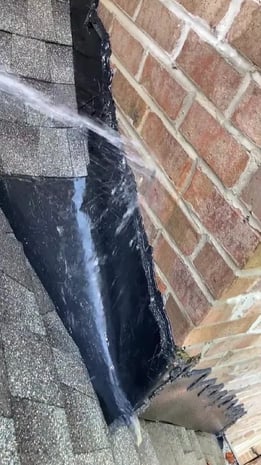
A water test usually happens after a visual inspection has come up inconclusive. It confirms a suspicion and gives a roofer targeted information to work from, which is especially valuable when a leak persists after previous repair attempts or hides in a complex, hard-to-reach spot like a valley or intersection. Roofers also use water tests as a quality check after a repair, to confirm the leak is truly gone.
Here is how a water test works:
- Interior inspection: the roofer starts inside, examining the area where you noticed the leak or water damage, looking for moisture or staining to narrow down the general location.
- Isolating the suspected area: based on those findings, they identify the nearest point in the attic or interior where water damage shows up.
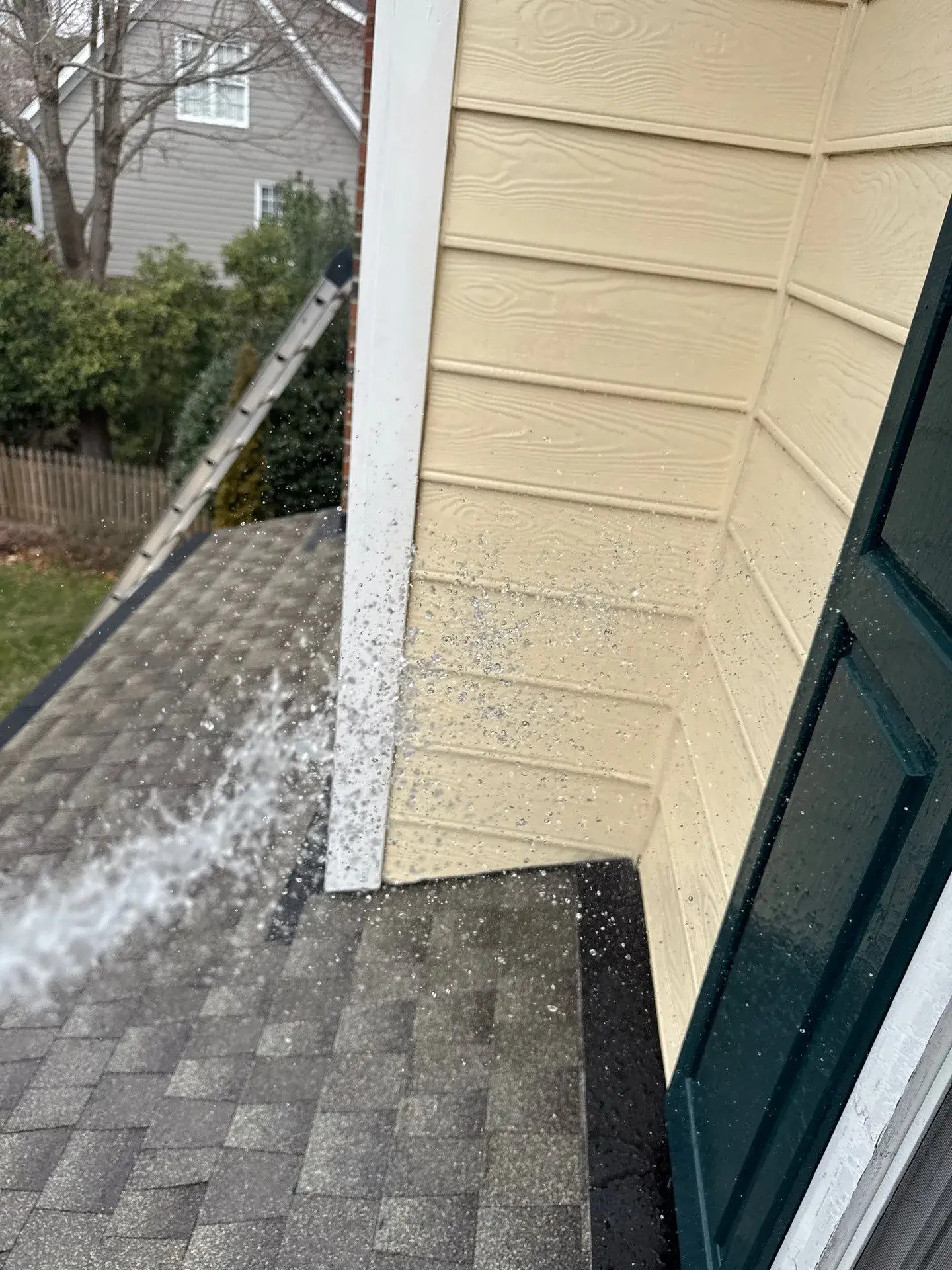
- Controlled water application: with the area isolated, they simulate rainfall on that specific spot using a hose, recreating the conditions that cause the leak.
- Observing water entry: while the water runs, someone watches the interior for dripping, dampness, or fresh staining. Where the water shows up inside points to the source.
- Adjustment and confirmation: if water appears, they move to different sections of the roof to confirm the source definitively, working systematically until the exact spot is clear.
- Repairs: once the source is found, repairs can begin, whether that means patching, replacing materials, or fixing flashing, seals, or vents.
Water tests should be done by experienced roofers, because applying water carelessly can drive moisture into places it was not before and create new damage. A water test is one step in the larger process of diagnosing and fixing a leak, and it works best in trained hands with the right equipment.
Why a Leak is Rarely Where You Think
Here is the single most important thing to understand about roof leaks, and the reason water tests exist at all: water travels. When water gets past your roof it rarely drops straight down, instead running along the underside of the decking, following a rafter or truss, and tracing a wire or pipe before it finally drips into your living space, often several feet from where it actually entered the roof.
That is why the brown stain on your ceiling is a starting clue rather than an X marking the spot, since the real breach is often uphill of the stain, sometimes well uphill on a low-slope section. Chasing the visible stain instead of the true entry point is how a leak gets repaired and then keeps leaking, and avoiding exactly that trap is what a careful water test is designed to do.
How Can You Check for Leaks?
Because a water test is a last resort, the simpler first step is a visual inspection, and by examining your roof's interior, especially the attic, you can often spot the signs. If there is an actual hole through the roofing and decking, daylight coming through from inside will point you right to the opening.
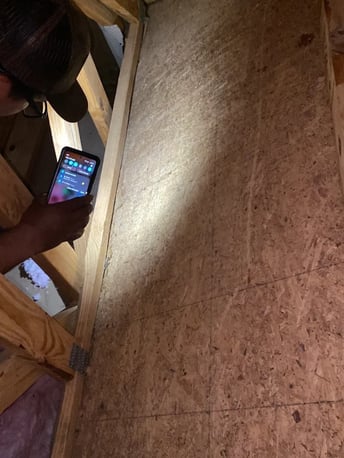
Another clear sign is water-damaged or rotted decking, where dark, soft, or stained spots on the wood mean moisture has gotten past your roof's primary barrier and begun breaking down the structure underneath. When you see that, water has already breached the roof and is doing harm. A visual inspection will not be as precise as a water test, but it usually gets you to the general area so repairs can be targeted, and from the ground a pair of binoculars helps you spot lifted shingles, damaged flashing, or a cracked pipe boot without ever getting on a ladder.
What to Do the Moment You Find a Leak
Finding active water coming in is stressful, but the first hour is about limiting damage, not fixing the roof. A few steps make a real difference:
- Move and cover what is below it. Get furniture, electronics, and valuables out of the way, and put down a bucket or bin to catch the water.
- Relieve a bulging ceiling. If a spot on the ceiling is sagging or bubbling, trapped water is pooling above it. Placing a bucket underneath and carefully puncturing the low point with a small hole lets it drain in a controlled way, which is less damaging than letting the ceiling give out on its own.
- Document everything. Photograph the damage inside and any signs outside before cleanup. This helps with an insurance claim and gives your roofer a head start.
- Stay off the roof. A wet roof is dangerous, and climbing up during or after a storm risks injury and more damage. Tarping is best left to a professional.
- Call a roofer promptly. The faster the source is found and repaired, the less the water spreads into decking, insulation, and drywall.
Common Causes of Roof Leaks
In Raleigh and across North Carolina, certain problems cause leaks far more often than others. The usual culprits are clogged gutters, damaged shingles, deteriorated pipe boots, flashing that is damaged or was installed incorrectly around chimneys and roof penetrations, and improper nail placement during the original installation.
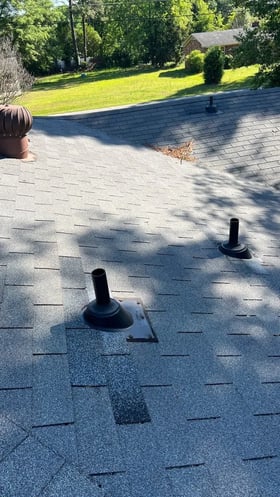
These weak points tend to reveal themselves after severe weather, which is a regular event here. North Carolina's pop-up summer thunderstorms, wind-driven rain, and the occasional hurricane remnant all push water into gaps that a calm rain never reaches, and our humidity is hard on rubber pipe boots that dry out and crack. That is why a post-storm inspection is one of the smartest habits an NC homeowner can build, since catching a small problem early keeps it from becoming an interior repair.
How to Fix a Roof Leak
Fixing a leak usually means replacing the damaged component, whether that is shingles, a pipe boot, or improperly placed nails. The catch is that a leak is often more than what you can see, because water that traveled before it surfaced may have damaged decking or framing along the way, so a real repair means assessing the full extent rather than just covering the spot where the water showed up.
That is why leak repair is best handled by experienced roofers, since a proper repair addresses the leak and restores the structure around it so the fix actually lasts. As a certified roof inspector, finding the true source is the part we take most seriously, because a leak repaired in the wrong place is not repaired at all. On Tops Roofing has been tracking down and fixing leaks across the Raleigh area since 1991, and after more than 15,000 roofs, we have learned that the diagnosis matters as much as the patch.
FAQ
Why is the leak not directly above the water stain?
Because water travels. After it gets past the roof, it runs along decking, rafters, pipes, and wires before dripping inside, often several feet from where it entered. The stain shows where water exited, not where it got in, which is why finding the true source takes a careful inspection or water test.
Can I do a water test myself?
We do not recommend it. Without experience it is easy to apply too much water or send it into areas that were dry, creating new damage, and it requires one person on the roof and another watching inside. A professional has the technique and equipment to do it safely.
What are the most common causes of roof leaks in NC?
Clogged gutters, damaged shingles, cracked pipe boots, and failed or poorly installed flashing around chimneys and vents top the list. Our humidity and frequent storms accelerate all of them, which is why these spots are the first places a roofer checks.
What should I do right when I find a leak?
Move valuables out of the way, catch the water with a bucket, and if the ceiling is bulging, drain it carefully through a small hole. Photograph the damage for insurance, stay off the wet roof, and call a roofer promptly to limit how far the water spreads.
Will my homeowners insurance cover a roof leak?
It depends on the cause. Sudden damage from a storm is often covered, while leaks from age, wear, or deferred maintenance are usually not. Document the damage with photos as soon as you find it and review your specific policy.